Should you water houseplants less in winter?
Often, you will need to wait longer between waterings when winter light slows a plant's growth. That is a reason to reassess the pot, not a rule to cut every plant's water in half. A flowering holiday cactus, a tropical seedling under effective grow lights and a foliage plant at a dim window can have different needs on the same day.
This guide focuses on changing your care as conditions shift. For the basic technique of checking moisture, judging pot weight and wetting a root ball evenly, start with our guide to deciding when a houseplant needs water. Here, the question is what to adjust after daylight, heating or the plant's location changes.
What changes when the furnace comes on and the days shorten
Less usable light generally means slower growth and lower water use. A pot that dried quickly beside a bright summer window may remain moist much longer after shorter days arrive. Continuing the old watering routine can leave the root zone wet before the plant needs another drink.
Heating does not produce one predictable result. A warm air stream can dry exposed leaves or the top of the mix while the deeper root ball remains moist. A pot beside cold glass may also be cooler than the room thermostat suggests. Check where the plant actually stands, including after dark and while the heating system runs.
When you bring a plant indoors from a patio, it also loses some combination of outdoor light, air movement and exposure to rain. Recheck its drying pattern after the move instead of continuing either the outdoor watering schedule or a generic indoor winter schedule.
Compare three winter growing situations
A foliage plant at a low-light window in a cold-winter home: reduced daylight may slow growth enough that the pot stays moist longer. Keep checking it, but leave the watering can alone when the root zone is still appropriately moist. Move the plant away from cold glass or direct heat if those are part of the problem.
A plant growing under effective supplemental lighting: winter on the calendar does not necessarily mean a dormant plant. Consider the light actually reaching the leaves, visible growth and how fast the pot dries. Adding a lamp is not, by itself, proof that the plant now needs more water.
A bright room in a mild-winter region: a gardener in South Florida or Southern California may have a different winter growing environment from someone in Minnesota. Window exposure, shading, air conditioning and the species still matter. A warm climate does not guarantee adequate indoor light, just as a northern address does not prevent successful growth under suitable lights.
Change the interval before turning each watering into a tiny sip
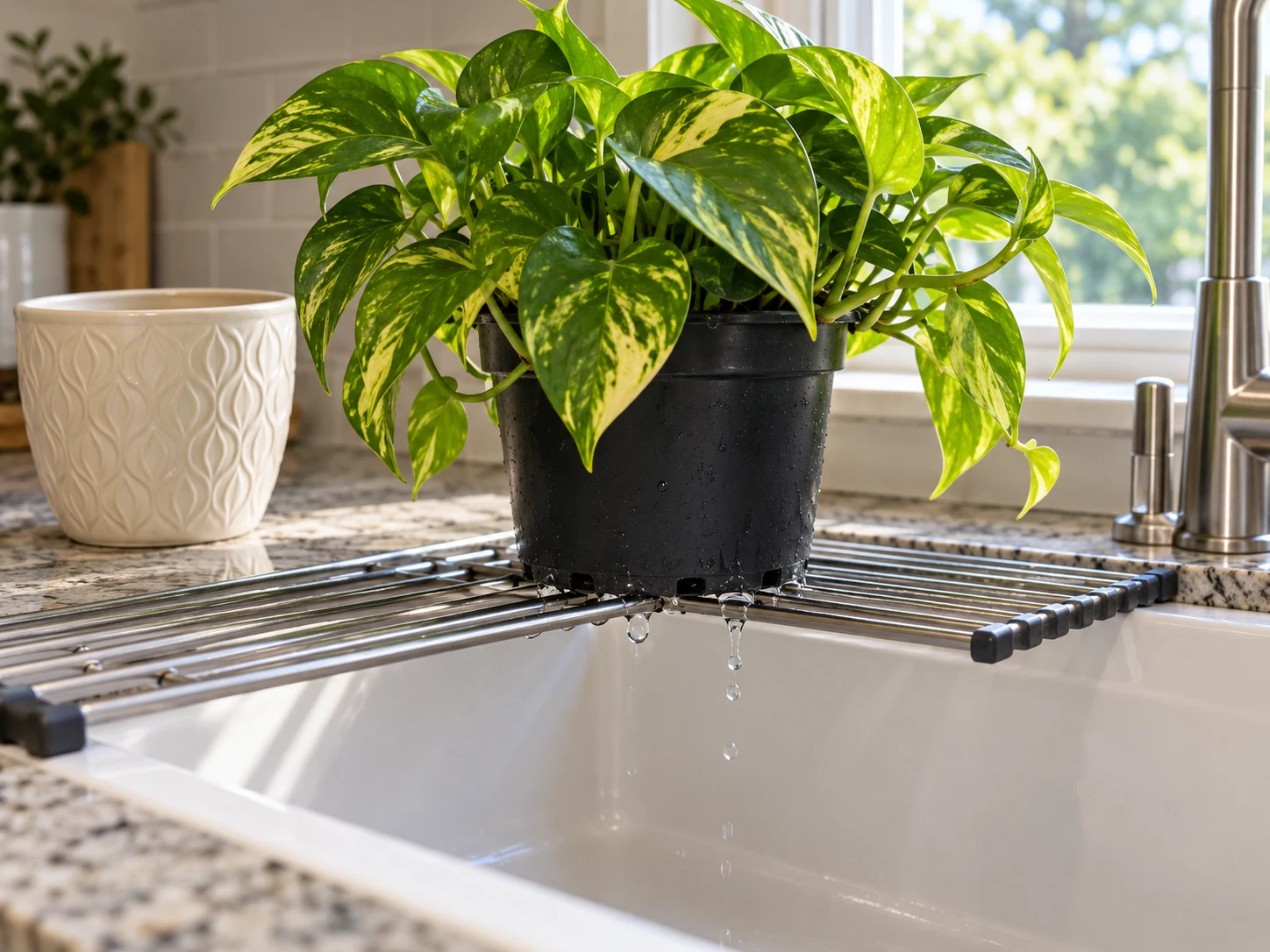
For ordinary houseplants in freely draining potting mix, lower demand often means watering less frequently rather than sprinkling the surface every day. When the plant reaches its appropriate drying point, moisten the root ball evenly and allow excess water to escape. How much drying is appropriate remains species-specific.
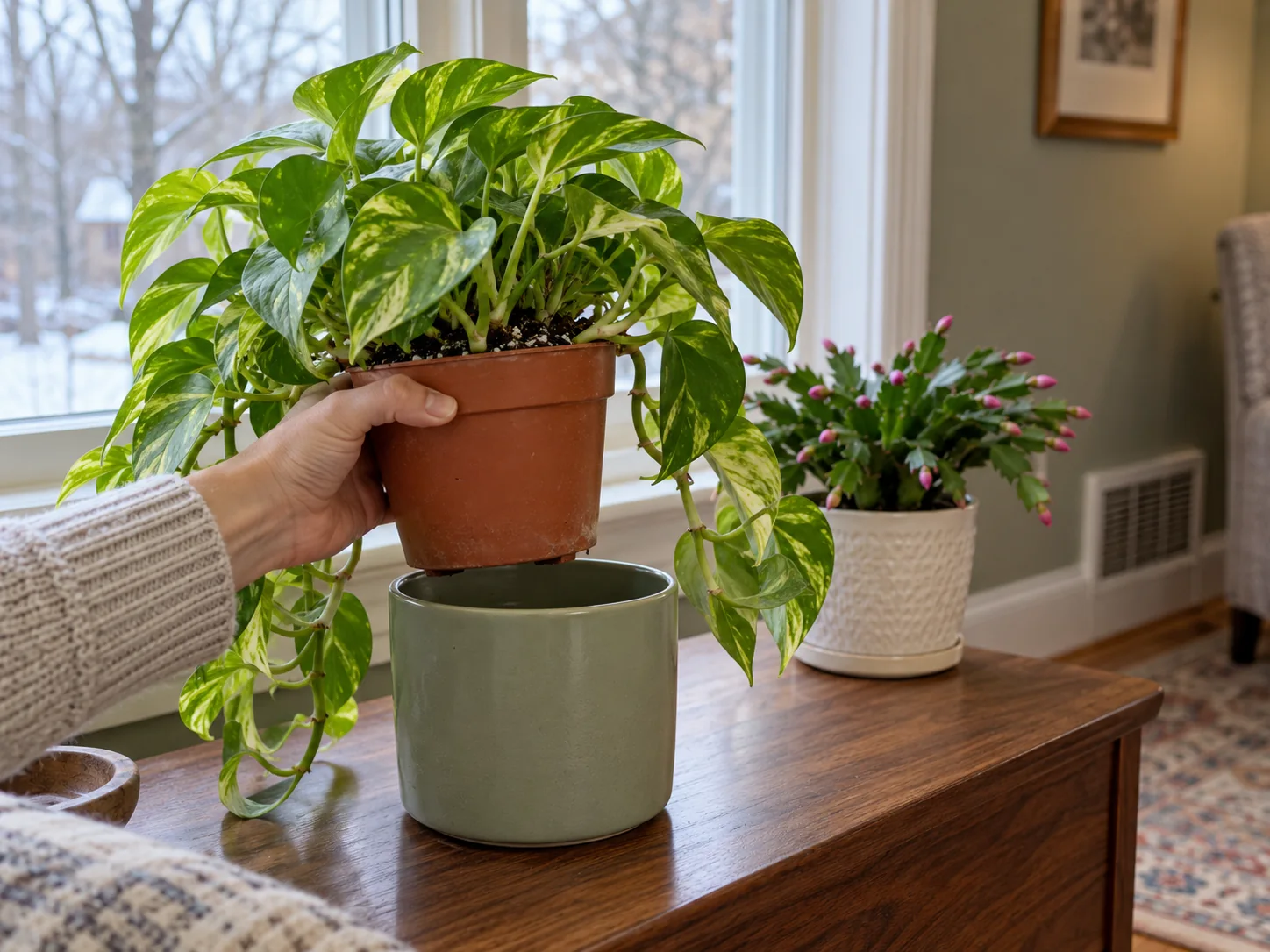
Check the empty outer pot or saucer before returning the plant. Water trapped there can keep roots wet even when the inner container has drainage holes. If the potting mix remains damp much longer than before, use that observation to delay the next watering and investigate the growing conditions.
A large container with few roots deserves particular attention: its surface can look dry while the lower mix is still wet. Do not repeatedly add water based only on the top crust. Orchids in bark, hydroponic systems, self-watering containers and newly germinating seeds need instructions suited to those systems rather than this general approach.
Do not give a budding holiday cactus a desert-cactus winter
Christmas and Thanksgiving cacti are forest cacti. While buds and flowers develop, allowing the root ball to stay completely dry can cost you part of the display. Keeping moisture reasonably consistent does not mean leaving the pot in water.
The practical winter adjustment is to check the pot, keep it out of direct heating streams and avoid abrupt changes in light or temperature. If unopened buds are already falling, use our Christmas cactus bud-drop checklist to distinguish moisture stress from a recent move or draft. Advice about initiating flower buds during long nights is a different topic from keeping existing buds attached.
Tropical seedlings still need suitable light and warmth
Young plants have limited root systems, and neither a cold wet pot nor prolonged drying is a useful winter strategy. Check small containers more closely rather than assuming a mature foliage plant's routine suits every seedling. A warm room with weak light may still provide poor growing conditions.
Papaya illustrates the distinction: it is a tropical evergreen, not a plant to put into cold dormancy because winter arrived. Our indoor papaya growing guide explains the importance of root-zone conditions and winter light. Adjust water to its actual growth and moisture use; extra watering cannot replace adequate light or rescue chilled roots.
Dry room air and wet roots can happen together
Brown edges or drooping leaves do not tell you, by themselves, whether to water. Check below the surface and look for trapped runoff. If the mix is already wet, another soak may make the situation worse. Low room humidity and high moisture inside the pot are separate observations.
Move plants out of direct supply-vent airflow. If humidity is a problem for the species, evaluate the room conditions separately and use any humidifier according to its cleaning and operating instructions. Do not keep topping up the pot as a way of humidifying the room.
Progressive collapse, a soft base, a rotten smell or deteriorating roots warrant closer inspection. See our root-rot diagnosis and recovery guide before deciding whether the plant needs a change of care or an urgent intervention. A healthy plant does not need emergency repotting simply because winter started.
Keep a winter check routine, then reassess when growth changes
Use reminders to inspect plants, not to water every pot automatically. For a plant that has just moved indoors, record whether the mix was still moist, whether you watered and what changed in its position. After several checks, you can see whether the drying interval is lengthening or shortening.
As daylight and growth increase again, revisit the same observations. Do not wait for a fixed spring date to notice that a pot is drying more quickly, and do not immediately resume last summer's routine for a plant that is still barely growing. The useful pattern is a care adjustment supported by what the plant and pot are doing now.
FAQ
Frequently asked questions
There is no interval that fits every species or room. Check moisture and the plant's growth. Many low-light plants need longer between waterings, while actively growing or flowering plants may continue to use water regularly.
Not automatically. Reassess how quickly each pot dries. For ordinary freely draining potting mix, lower demand often calls for a longer interval between thorough waterings rather than frequent small sips.
No. The amount of useful light, temperature, growth and drying rate determine demand. Effective supplemental lighting can support continued growth, but a lamp alone does not establish a watering schedule.
Avoid prolonged complete drying while it develops buds and flowers. This forest cactus should not be given a desert-cactus dry rest at that stage, and its roots must not sit in water either.
Dry air, heat exposure, root damage and other problems can affect the leaves. Their appearance alone does not prove the roots lack water. Check the mix, drainage and location before watering again.
Reassess when stronger light, new growth or a change of location makes the pot dry faster. Use the actual growing conditions rather than a nationwide spring date.