Yellow leaves are a symptom, not a diagnosis
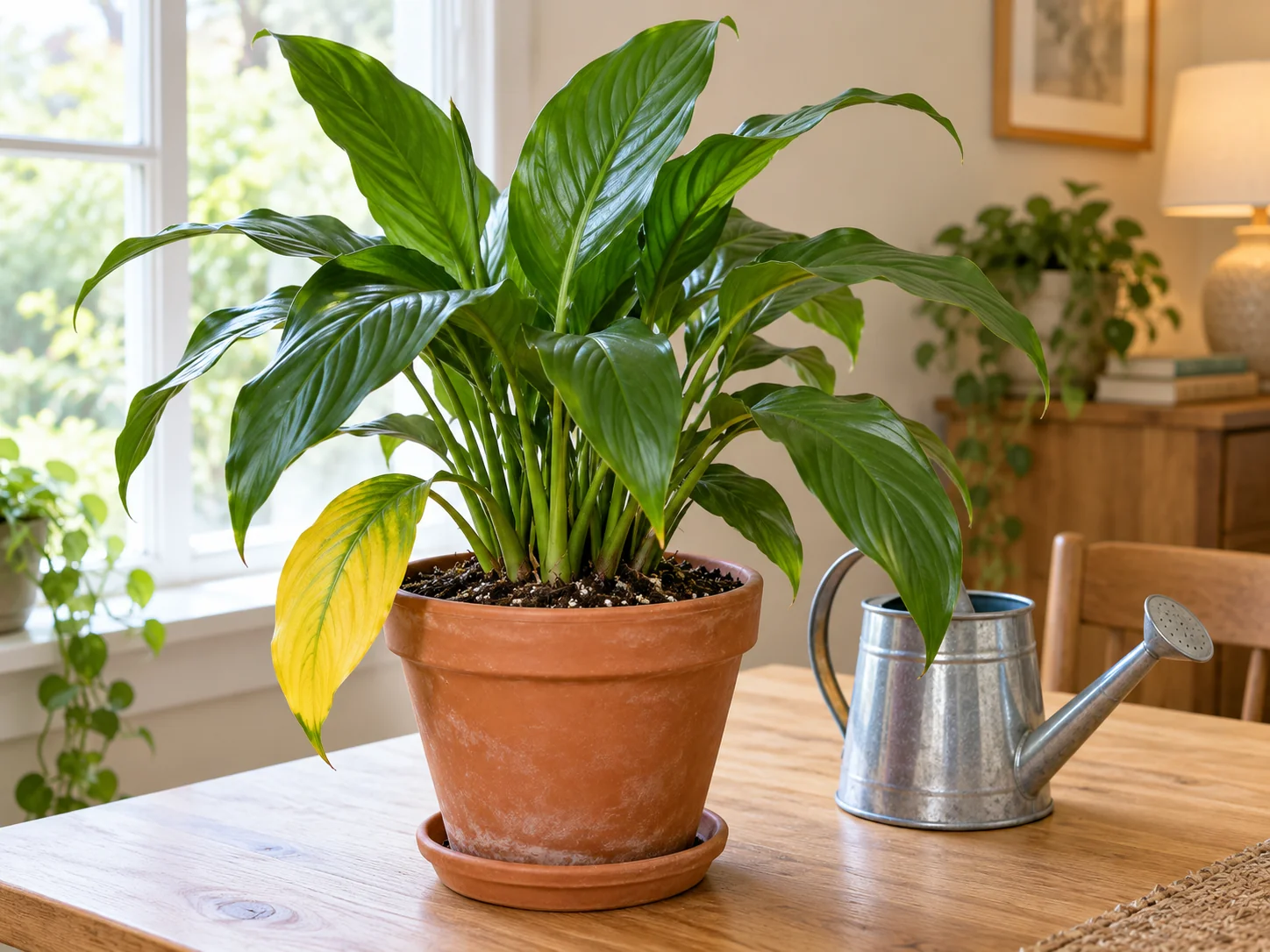
If your houseplant is turning yellow, adding more water may be exactly the wrong response. Yellowing leaves can result from soil that is too wet, soil that is too dry, low light, aging foliage, root damage, pests or abrupt changes in growing conditions.
Start with the pattern. Is one old lower leaf fading while the rest of the plant grows well, or are several leaves turning yellow at once? One aging leaf may be normal. Sudden, widespread yellowing calls for a closer look at the roots and the environment.
Check the soil below the surface
The surface of potting mix can look dry while the root zone remains wet. Carefully check moisture deeper in the pot, or compare its weight just after watering with its weight as it dries. Make sure the pot has drainage holes and that the outer decorative container is not holding standing water. Our guide to how often to water houseplants explains how to assess the pot rather than follow a fixed interval.
If the root zone is still soggy, do not water just because the calendar says it is time. Roots need oxygen as well as moisture. Prolonged waterlogging can damage them, preventing leaves from getting the water and nutrients they need.
Too dry can look similar — here is the difference
Very dry potting mix can pull away from the pot walls and become hard to wet evenly. A thirsty plant may have dry, lightweight soil and drooping or crisp leaves. If the mix is genuinely dry, water thoroughly and let the excess drain away.
Drooping does not prove dryness: plants with damaged, waterlogged roots may also wilt. That is why checking the pot before watering is more useful than judging the leaf shape alone.
Light and temperature matter, especially in fall
Where daylight and indoor temperatures fall during the local autumn and winter, plant growth often slows. This seasonal change occurs at different times in the two hemispheres and may be less pronounced in tropical homes. A pot that needed frequent watering in brighter, warmer conditions may stay moist for much longer near a cool window. Moving the plant farther from daylight can make this worse.
Give the species the light it needs, avoiding sudden exposure to harsh direct sun. Keep foliage away from heating vents and cold drafts. If leaves are yellowing soon after a move, compare the new conditions with the old location before using fertilizer or pest treatments.
When to inspect the roots
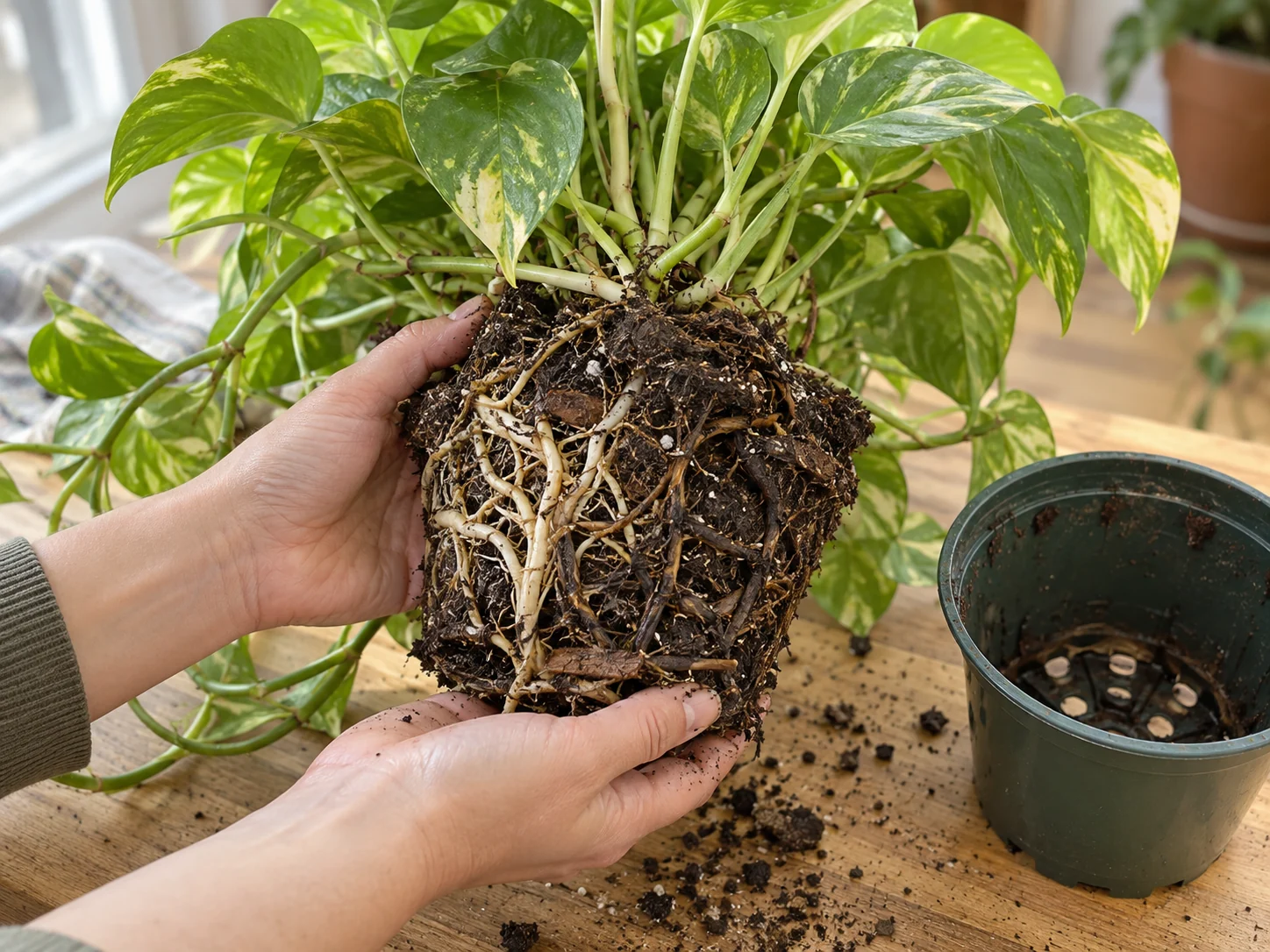
If several leaves are yellowing and the pot stays wet unusually long, gently inspect the root system. Healthy roots vary in color by species, but mushy, collapsing or foul-smelling tissue suggests damage. Remove clearly dead tissue with clean tools when repotting, and use a potting mix appropriate to the plant. For a step-by-step assessment, see root rot signs and recovery.
Check leaf undersides and stems for insects as well. Do not reach for an all-purpose treatment without identifying the cause, and avoid heavy fertilizing while roots are stressed.
If pale stippling is accompanied by tiny moving specks on leaf undersides or fine webbing, follow our guide to identifying and managing spider mites on houseplants. These signs need a different response from a pot that is simply too wet or too dry.
A simple decision before the next watering
Wet mix? Wait and address drainage or lighting issues. Dry root zone? Water and let it drain. Still unsure? Check the species, root condition and recent changes. This approach is more reliable than a fixed weekly schedule.
There is no universal watering interval for all houseplants. A pothos, a succulent and a fern differ in their needs, even on the same windowsill. The goal is to match watering to the plant and the conditions rather than react to every yellow leaf with another splash of water.
FAQ
Frequently asked questions
No. Dry soil, insufficient light, pests, normal aging and root damage can also cause yellowing.
Not before checking growing conditions and roots. Fertilizer cannot fix saturated soil or root rot.