Start with a moisture check, not a weekly watering day
There is no reliable number of days between waterings that suits every houseplant. The useful question is whether this plant, in this pot, has reached the point where it needs water. A reminder can tell you to inspect it; it cannot tell you how much moisture remains around the roots.
For many common foliage plants, checking the upper potting mix and lifting a manageable pot gives a better starting point than counting days. Combine those observations with the requirements of the species. Do not wait for every plant to collapse before watering, and do not water every pot just because one looks dry.
This guide concerns ordinary containers filled with potting mix. Orchids growing in coarse bark, carnivorous plants, seedlings, hydroponic systems, and self-watering planters need more specific instructions. Even among familiar houseplants, a fern and an aloe should not share one moisture target.
How to tell whether the potting mix is actually dry
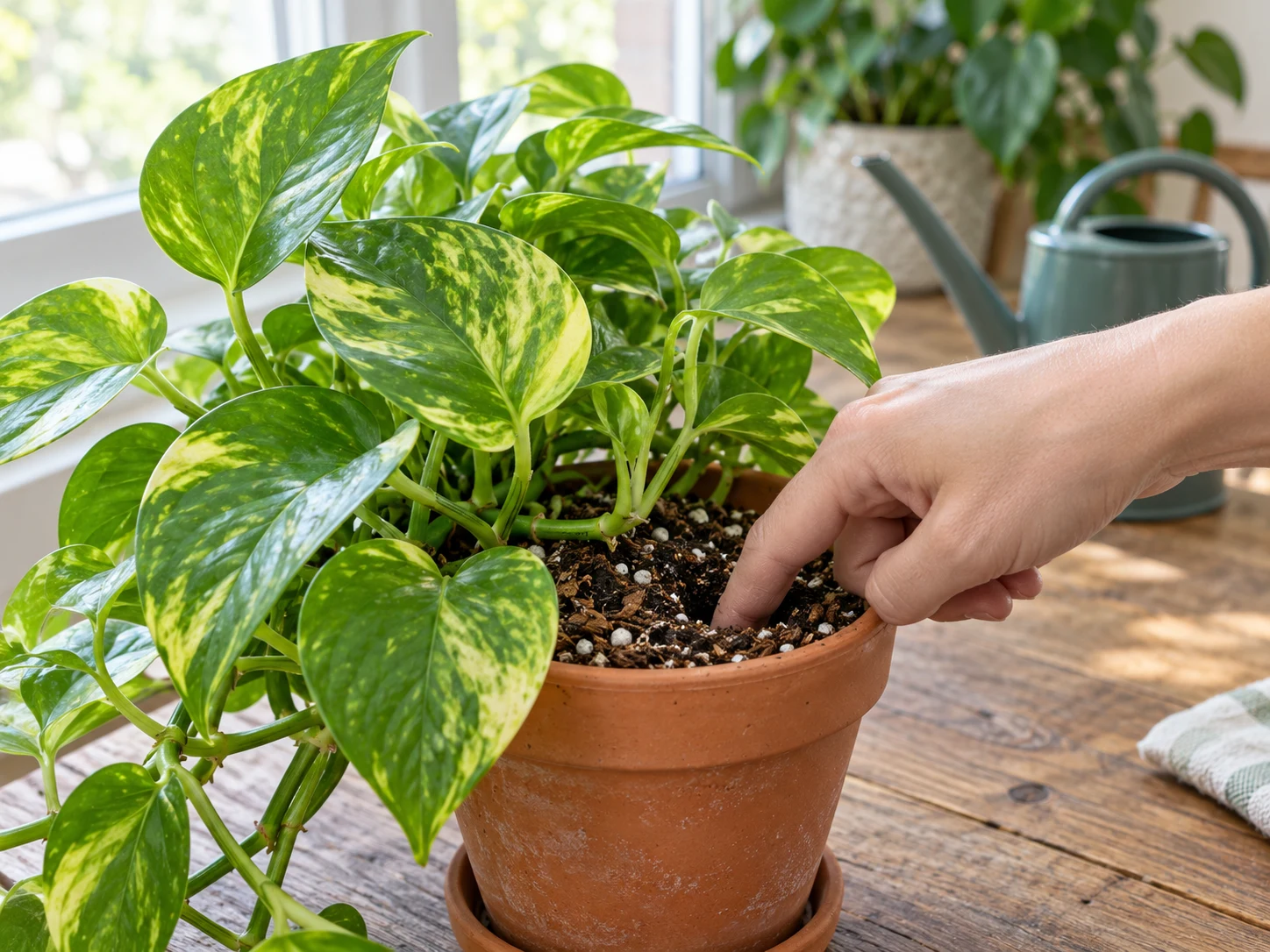
Move aside any loose decorative covering and feel the mix beneath the surface. In a small or medium foliage-plant pot, checking roughly 2–5 cm (1–2 inches) down is a useful observation, not a universal watering threshold. A dry crust can hide moisture below it. Avoid forcing a finger through a dense root mass or repeatedly probing the same spot.
Lift the pot if you can do so safely. Compare its weight with how it feels after watering and draining. A much lighter pot suggests that water has been lost, but the comparison only makes sense for the same plant and container. A heavy ceramic planter cannot be judged against a lightweight plastic nursery pot.
A large, deep container needs more caution: the upper layer may dry while the lower root zone stays wet. If the surface and weight tell different stories, check drainage and the plant's condition before adding water. Do not treat a surface test as proof that the entire pot is dry.
Keep a short note for a newly purchased plant: date checked, whether the mix felt moist, whether you watered, and any change of location. After several checks, you will have a useful record of that plant's drying pattern rather than someone else's timetable.
Match the drying point to the plant
Many leafy houseplants are watered after the upper part of their mix has begun to dry, while some moisture-loving plants need more consistent moisture. That does not mean permanently saturated soil. Roots need a suitable balance of water and air, and a pot can stay too wet even when the leaves look healthy at first.
Drought-adapted succulents generally need a more pronounced drying period. Giving an aloe another drink whenever the surface looks pale can keep the deeper mix wet for too long. Check a species-specific guide rather than applying foliage-plant advice to every plant with a pot.
If you cannot identify the plant, make that the next step. A watering method is only useful when its target is appropriate. Guessing that all tropical plants want wet soil, or that all thick-leaved plants need almost no water, replaces one unreliable rule with another.
Water the root ball, then let excess water drain
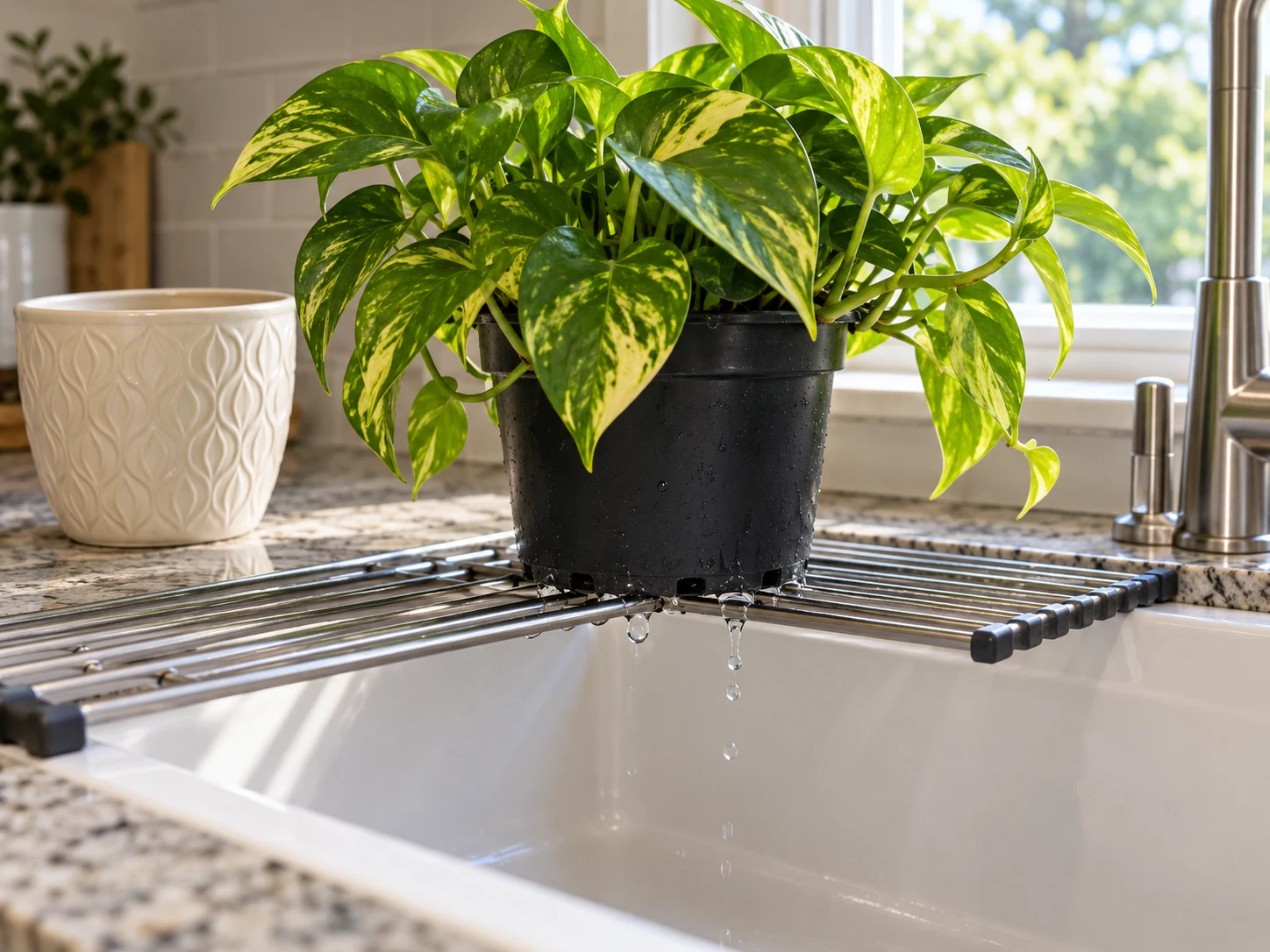
When watering is due, take a removable nursery pot out of its decorative outer container. Set it over a sink or another place where runoff can escape. Apply water slowly across the potting mix rather than pouring everything against one edge. The aim is to moisten the root ball, not simply wet a small patch at the surface.
Allow excess water to drain freely, then empty the saucer or outer pot before putting the plant back. Check again if water continues to collect. A drainage hole does not protect roots when the container is standing in a pool that cannot escape.
A few drops from the base are not always proof of even wetting. Very dry mix can pull away from the pot and let water bypass the roots. If water runs straight through but the root ball remains dry and unusually light, rewet it slowly rather than repeatedly flooding the same channel.
Bottom watering can help rewet some ordinary potting mixes: allow water to enter through the drainage holes, monitor absorption, and remove the pot once the mix has taken up moisture. Drain it afterward. Do not leave it soaking indefinitely or assume this method suits every species.
Why the same plant dries faster in another room
Light, temperature, humidity, pot material, growing medium, and the amount of root growth all affect drying. A plant moved to a brighter position may use water differently; a porous terracotta pot can lose moisture differently from a plastic one. Recheck the plant after a move instead of carrying its old schedule into the new location.
Repotting also changes the situation. A large amount of fresh mix around a small root system can remain moist for longer than expected. Use a suitable container size and a porous mix matched to the plant. Extra soil is not automatically an improvement, and garden soil is not a direct substitute for a purpose-made container mix.
Adjust to your home and climate, not a month on a global calendar
Advice to reduce watering in October assumes conditions that may not apply to you. Daylight can be decreasing in one region while plants elsewhere are entering a brighter growing period. Near the equator, wet and dry seasons may matter more than the familiar four-season calendar.
Indoors, heating, air conditioning, window position, and grow lights further change the picture. Check whether the pot is drying faster or more slowly and whether the plant is actively growing. A regional seasonal guide is helpful context, but the condition of your plant remains the decision point.
For example, if the mix still feels moist on the day you normally water, record that and wait. If another plant dries earlier after a change of location, check it sooner. Adjust the inspection interval first; do not compensate for uncertainty by adding a little water every day.
For the seasonal transition, see when to reduce houseplant watering in winter. It compares a dim windowsill, an actively growing plant under lights and a mild-winter home, so you can decide what to change without replacing one fixed schedule with another.
Drooping leaves do not prove that a plant is thirsty
Wilting can occur when roots lack water, but also when damaged roots cannot take it up properly. Before reaching for the watering can, feel the mix and inspect the outer container. A drooping plant sitting in wet soil needs investigation, not an automatic top-up.
Yellow leaves and brown tips are also clues rather than a diagnosis. Consider changes in light or temperature, the age of the affected leaves, visible pests, and the root environment. One damaged leaf is not enough to establish root rot or a fertilizer deficiency.
If decline continues while the mix stays wet, check for blocked drainage and, when warranted, gently inspect the roots. Soft, deteriorating roots are more concerning than color alone. Persistent problems may require fresh suitable mix or species-specific help; neither fertilizer nor another soak repairs the underlying cause by itself.
Your next useful action should follow the evidence: water a genuinely dry root ball according to the plant's needs, empty trapped runoff, or investigate persistent wetness. That small pause before watering is often more useful than a complicated calendar.
FAQ
Frequently asked questions
It may suit a particular plant for a while, but it is not a dependable rule. Use the reminder to check moisture and the plant's requirements, then water or wait.
Check below the surface first. The upper layer can dry while the lower mix stays moist, especially in a deep pot. Combine the check with pot weight and species-specific guidance.
Yes. Watering again before the plant needs it, poorly aerated mix, or runoff trapped in an outer pot can keep the root zone too wet despite drainage holes.
Not automatically. Follow actual light, temperature, growth, and drying conditions. Hemisphere, climate, indoor heating, and artificial lighting make a universal seasonal schedule unreliable.