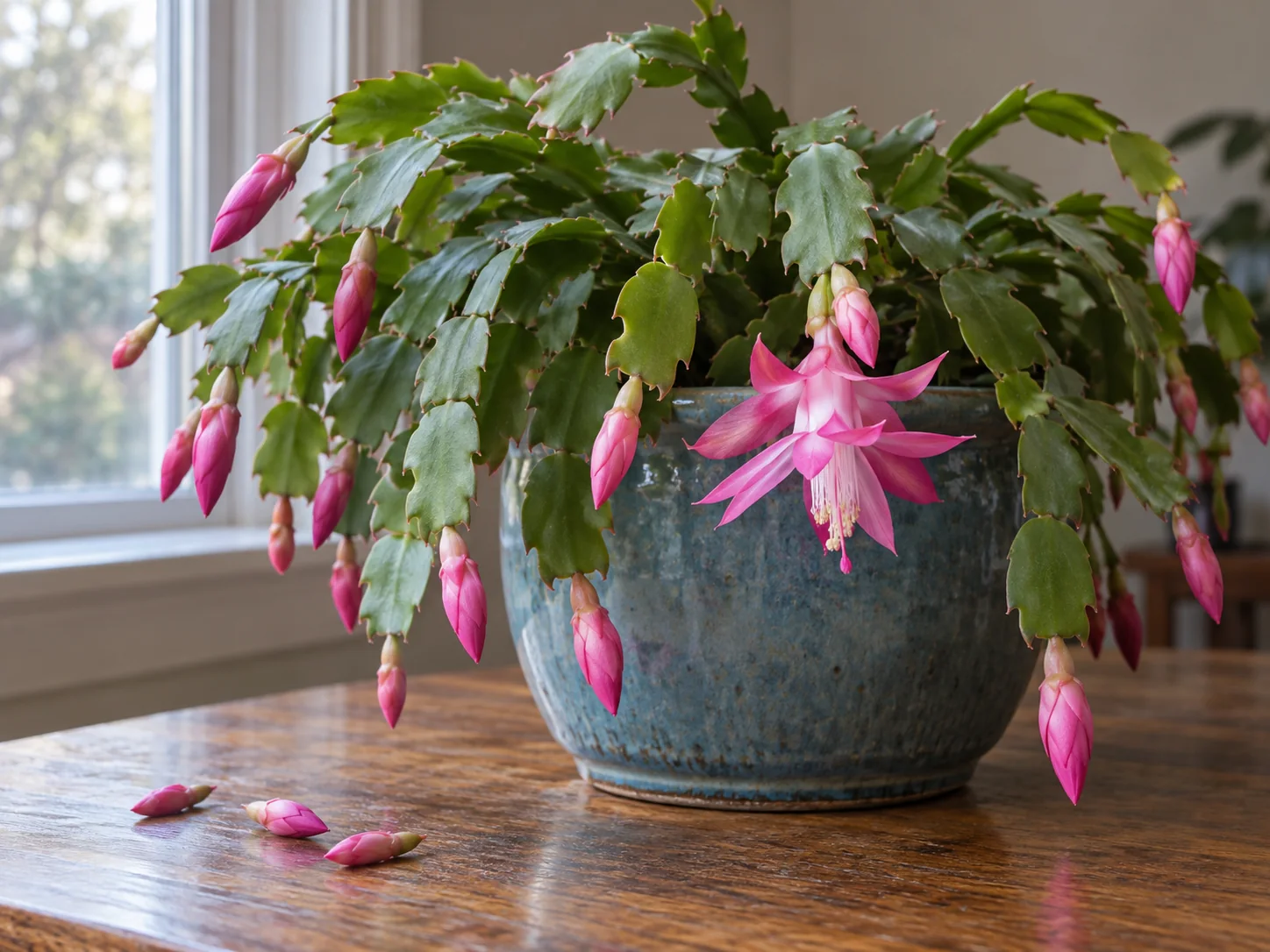
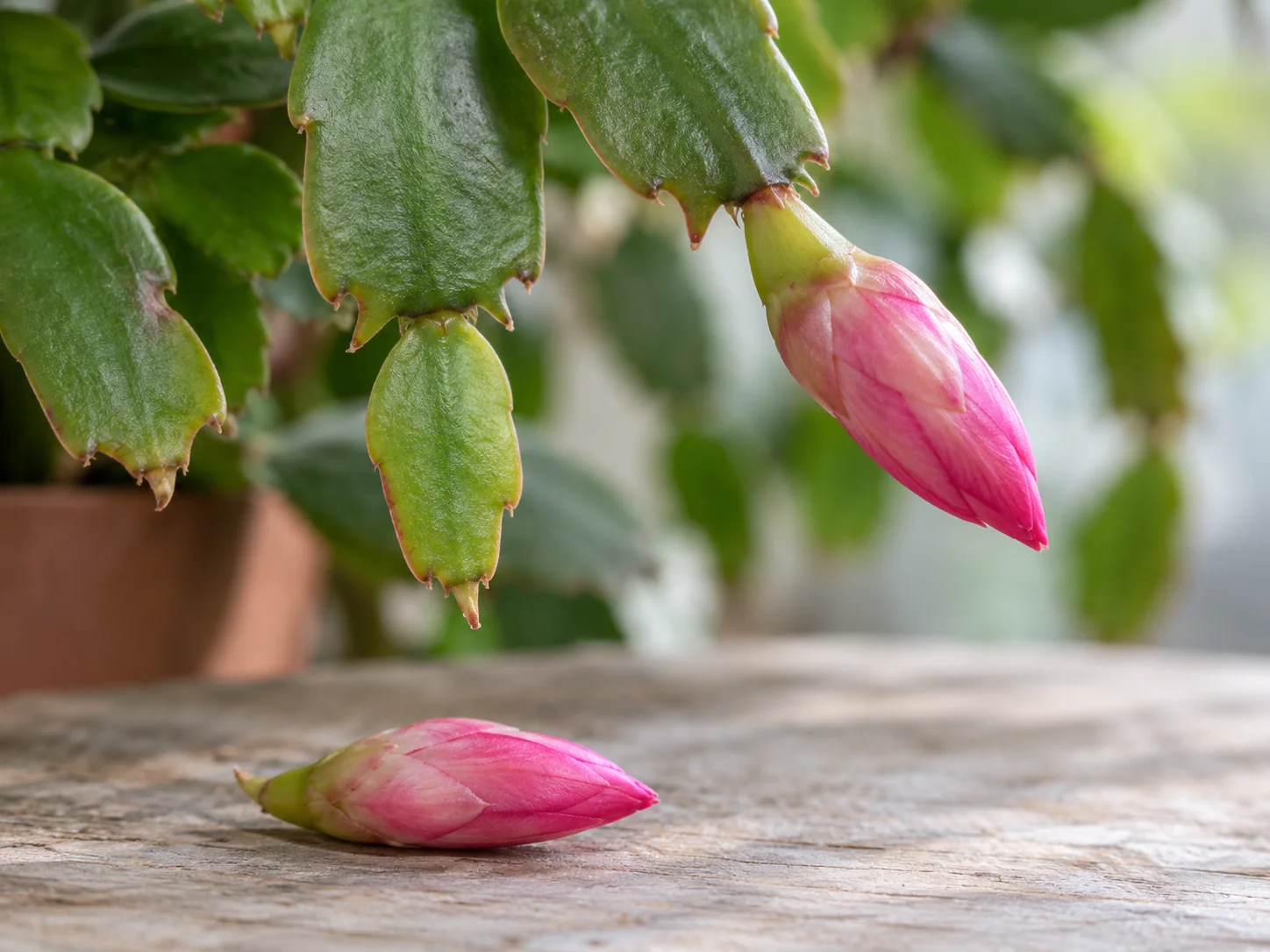
Why are Christmas cactus buds falling off?
Christmas cactus buds falling off usually signal stress during bud development. Start with temperature changes, a root ball that became too dry or too wet, a change of location, and dry indoor air. The same symptom can have more than one cause, so watering more is not automatically the right fix.
A plant with firm green stems and a few detached buds needs a different response from one collapsing in wet potting mix. First check the root-zone moisture and whether the pot is sitting in water. Then think back to when the loss began: after the trip home from the store, after the furnace came on, or after a missed watering?
This guide covers the Schlumbergera plants commonly sold as Christmas or holiday cactus, including Thanksgiving cactus (Schlumbergera truncata). The true Christmas cactus, Schlumbergera × buckleyi, generally has more rounded stem margins; many store plants have the pointed edges typical of Thanksgiving cactus. The name on a holiday display does not guarantee the plant will bloom precisely on Christmas Day.
1. Temperature swings, heating vents and cold drafts
A window can offer useful daylight while creating an unstable spot: cold glass at night, direct warmth from a floor register by day, or an icy draft when a nearby door opens. A newly purchased plant may also have been chilled between the store and the car. Developing buds can respond to these abrupt changes by dropping.
Check conditions at plant height, including after dark and while the heating system runs. Choose bright, filtered daylight away from the path of a supply vent, fireplace or frequently opened exterior door. Keep the segmented stems clear of cold glass. A room thermometer beside the pot is more informative than a thermostat across the house.
If the present location is harmful, make one careful move to a suitable spot rather than leave the plant in a hot air stream. Repeated trips between a cool bedroom and a warm living room are the pattern to avoid. In much of the United States this becomes an issue during fall and winter heating; in warmer regions, an air-conditioning vent or a change from outdoors to indoors may be the relevant transition.
If the heating season has changed how quickly several pots dry, our guide to adjusting houseplant watering in winter explains how light and furnace airflow affect the wider collection. Keep a budding holiday cactus out of any blanket desert-cactus dry-rest routine.
2. The root ball dried out while buds were developing
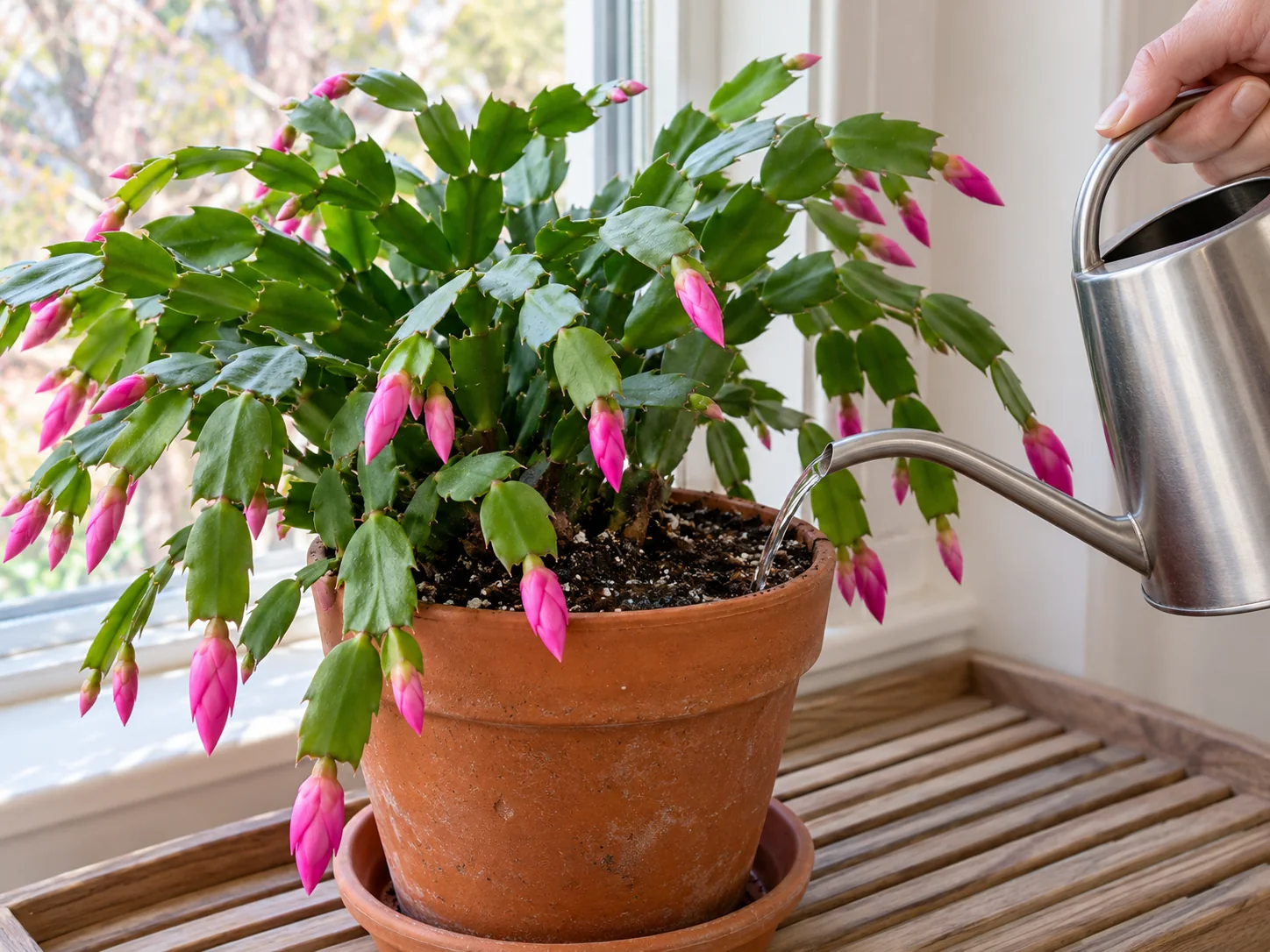
Holiday cacti come from forest habitats and should not be treated like desert cacti. While buds and flowers are developing, prolonged dryness can interrupt the display. A very light pot, dry mix below the surface and wrinkled segments suggest a water-supply problem, but wrinkling alone is not a diagnosis.
If the mix is dry, water slowly and thoroughly over the potting medium, then allow the excess to drain. If water races down a gap between the root ball and the pot, check whether the middle actually became moist; a wet saucer does not prove the roots received water. Rewet gradually and let the pot drain rather than leave it soaking indefinitely.
Check again before the next watering. The aim is a reasonably even moisture supply with air still present in the mix, not a permanently saturated pot. There is no reliable rule that every holiday cactus needs water every seven days: pot size, root growth, light and indoor temperature all change how quickly it dries. Our houseplant watering guide explains how to judge the pot rather than follow a calendar.
3. Water is trapped around the roots
A drooping plant in wet soil may need less water, not more. Remove the nursery pot from its decorative cover and look for pooled water. Check that the inner pot has drainage holes and that they are not blocked. Heavy, persistently wet potting mix can deprive roots of air and contribute to root deterioration.
Empty the cover or saucer and allow the mix to lose excess moisture before considering another watering. If the plant remains firm and the pot drains freely, correcting care may be enough; fallen buds alone are not a reason to disturb the root ball.
Inspect the roots if the stems continue to collapse, the base becomes soft, or there is a rotten smell. Roots that are mushy or disintegrating are more concerning than color alone. At that point, preserving the plant takes priority over preserving every bud. See our guide to houseplant root rot before deciding whether emergency repotting is needed.
4. A recent move changed the light
A holiday cactus covered in buds is tempting to move to a dining table or display shelf. If that place is much darker, hotter or drier than the growing spot, bud loss can follow. The transfer from a greenhouse or store to a home changes several conditions at once, which is why blaming a single small turn of the pot can be misleading.
Keep a budding plant in one suitable location with bright, indirect daylight. Avoid strong midday sun that heats the pot or scorches the stems, and do not assume that a dark room is helpful just because the plant needs long nights to initiate buds. Postpone an optional display move while buds are developing. If you must relocate it for safety or to escape a poor spot, preserve similar light and temperature as far as possible.
5. The surrounding air became much drier
Dry indoor air can add to moisture stress, especially when a plant moves from a humid growing environment into a heated home. First separate air humidity from soil moisture: pouring extra water into an already moist pot does not correct dry room air and can create a second problem.
Move the plant out of the direct heating stream and, if the room is unusually dry, use a humidity meter to understand the conditions. A properly maintained humidifier can make the environment steadier. The pot must still drain freely. Misting is not a substitute for checking the root ball or fixing a draft, and moving repeatedly between a dry room and a steamy bathroom creates another abrupt change.
What to do today, and what to watch over the next week
Today: remove any water trapped in the cover pot, check whether the root ball is dry or still moist, and identify a stable bright position. Water only if the condition of the mix calls for it. Take a photograph showing the remaining buds and the overall firmness of the plant.
Over the next several days: check the pot before watering and compare the remaining buds with the first photograph. Note whether losses started before or after a change in care. A few more buds may fall after an earlier stress; that does not justify switching treatments every day.
Look more closely if bud loss is accompanied by spreading soft tissue, rapidly collapsing segments or visible insects. Small cottony deposits, attached bumps or sticky residue warrant checking for pests, but a bare bud tip by itself does not prove an infestation. Avoid pesticide treatment without identifying a pest.
Should you fertilize, repot or remove the buds?
Extra fertilizer will not reverse cold injury, reattach a bud or restore oxygen to waterlogged roots. Keep feeding separate from troubleshooting the immediate loss. Do not cut off healthy buds or prune an otherwise firm plant in an attempt to force an instant replacement display.
Routine repotting can wait until the plant has finished flowering and is entering active growth. Repot earlier only if there is a genuine root or drainage problem that cannot be corrected without it. A holiday cactus can remain healthy in a relatively snug container; a larger pot is not automatically a better one.
No buds at all? That needs a different diagnosis
If the plant never formed buds, investigate flower induction rather than bud retention. Christmas and Thanksgiving cacti respond to a combination of long, uninterrupted nights and cooler conditions before flowering. Evening room lights or grow lights that extend the day can interfere with that process.
In temperate US homes the preparation period commonly falls in autumn, but actual light and temperature matter more than the month. In warm regions or under artificial lighting, the same calendar does not guarantee the same result. Do not suddenly put a plant with healthy existing buds in a dark closet as a treatment for bud drop.
FAQ
Frequently asked questions
It can. Buds still attached to healthy stems may continue to develop once conditions are steadier. Detached buds will not reattach, and a replacement flush in the same season is not guaranteed.
Not on a fixed schedule. Check the root-zone moisture. Avoid prolonged dryness during budding, but let excess water drain and never leave the inner pot standing in water.
Transport and the move indoors can change temperature, humidity, light and watering at the same time. Check for cold exposure, a nearby heating vent, a dry root ball and water trapped inside the decorative pot.
Fertilizer is not a quick fix for bud drop caused by temperature or watering stress. Investigate growing conditions first.
Yes. Persistently wet mix and trapped water can stress or damage roots. If stems look limp while the mix is wet, check drainage before adding more water.
Misting alone does not correct temperature swings, dry roots or waterlogging. Check the growing conditions first, and do not use extra watering as a way to raise room humidity.
Not every small rotation causes bud loss. Avoid unnecessary disturbance while buds develop, especially moves that also change light, temperature or humidity.