Can grocery-store papaya seeds really grow?
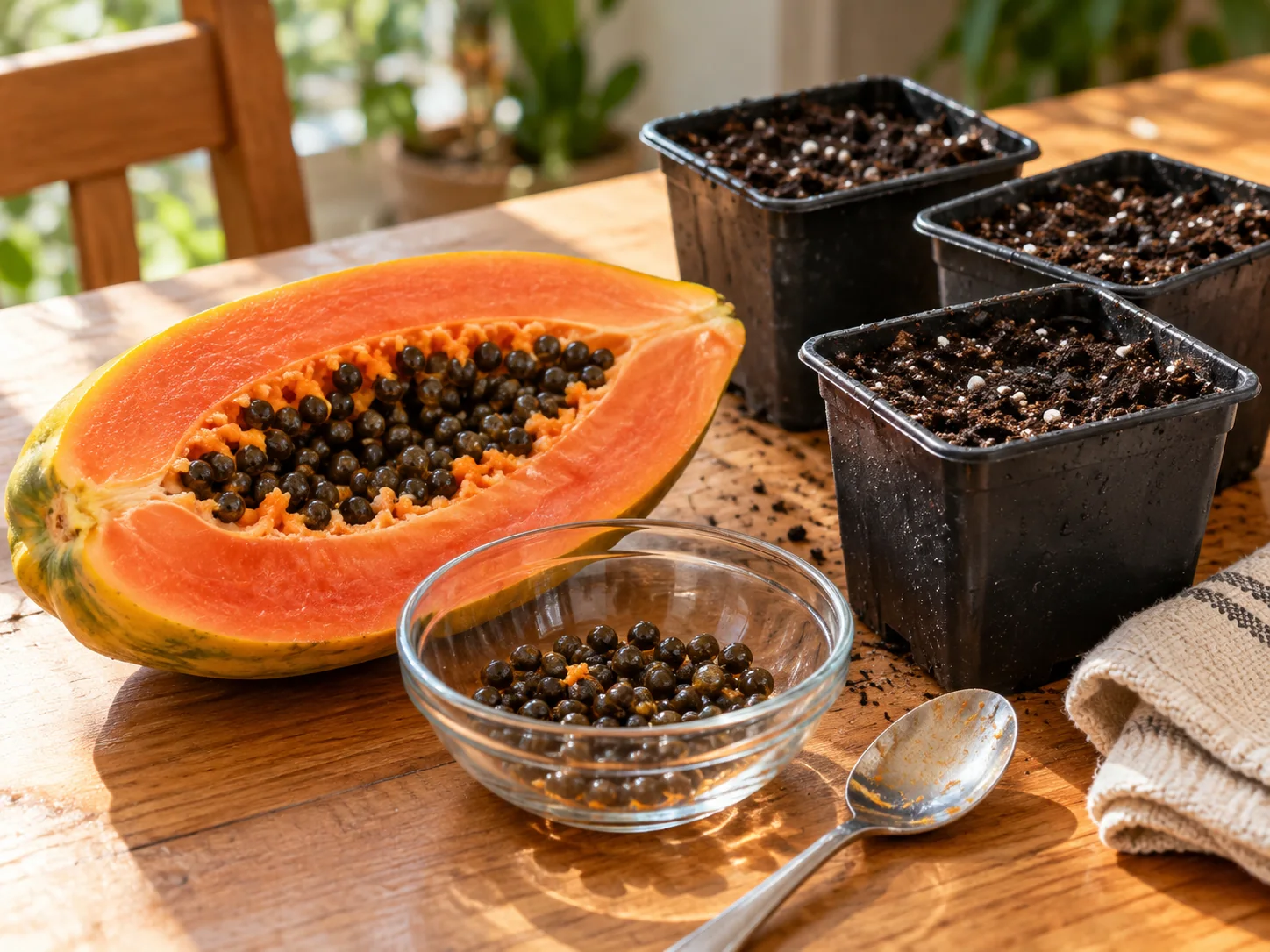
Yes. The black seeds inside a ripe papaya (Carica papaya) can be viable, though not every batch will sprout. Starting them indoors is an inexpensive way to watch a tropical plant develop. It is not a promise of fruit on a windowsill.
Papaya is frost-sensitive. In warm, frost-free parts of the US, plants may be grown outside for longer periods; in cold-winter regions, containers need to move indoors well before chilly nights. Seed-grown plants also may not reproduce the fruit's exact characteristics.
Clean fresh seeds before planting
Scoop several well-developed dark seeds from a ripe, sound fruit. Rinse them in a fine strainer, gently rubbing away the slippery outer coating. Leftover fruit pulp encourages mold in the seed-starting container.
Try sowing the seeds soon after cleaning. Do not crush them or use harsh disinfectants. Sow more than one because germination varies, but consider separate small pots to avoid disturbing sensitive roots later.
Start seeds in warm, well-drained potting mix
Use small pots with drainage holes and a loose seed-starting mix, with perlite if needed for aeration. Moisten the mix before sowing, then cover the seeds with about 1/4–3/8 inch (0.5–1 cm) of mix.
Warm soil is particularly important. A root-zone temperature around 77–86°F (25–30°C) supports germination; a cold winter windowsill may be far cooler than the room air. A clear cover can retain moisture, but ventilate it regularly and keep it out of strong direct sun to prevent overheating. The mix should feel lightly damp, never waterlogged.
When should papaya seedlings emerge?
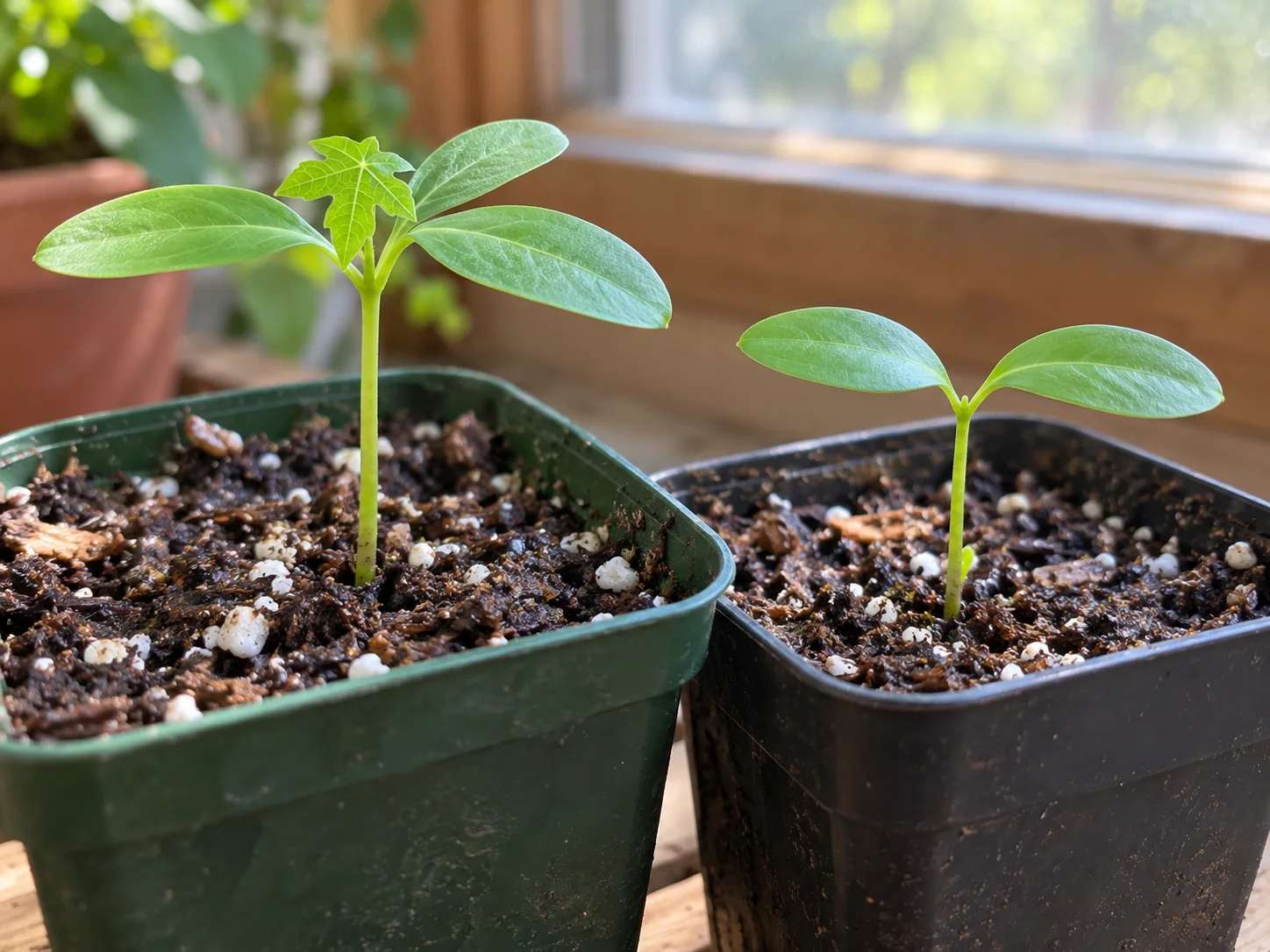
Seedlings often appear in roughly two to four weeks under favorable conditions, but some take longer and some seeds never sprout. Temperature and seed viability matter more than a date marked on the calendar. Avoid digging around to inspect them.
Once shoots emerge, remove the cover gradually and provide abundant light without suddenly exposing tender seedlings to scorching sun. The first pair of leaves are seed leaves, or cotyledons. Later true leaves develop the more recognizable papaya shape. Tiny cotyledons alone cannot reliably identify an unknown volunteer seedling.
Transplant carefully; papaya roots dislike disturbance
Once seedlings have several true leaves and a small root ball, move them into separate containers. Lift each one with the surrounding mix rather than tugging on its stem. Starting seeds individually can eliminate the most stressful transplant step.
Use a container only modestly larger than the root ball. Water thoroughly when needed, let the excess drain, and empty saucers. A larger pot full of perpetually damp mix can be a problem, especially in cool rooms.
Outdoor summers differ across the United States
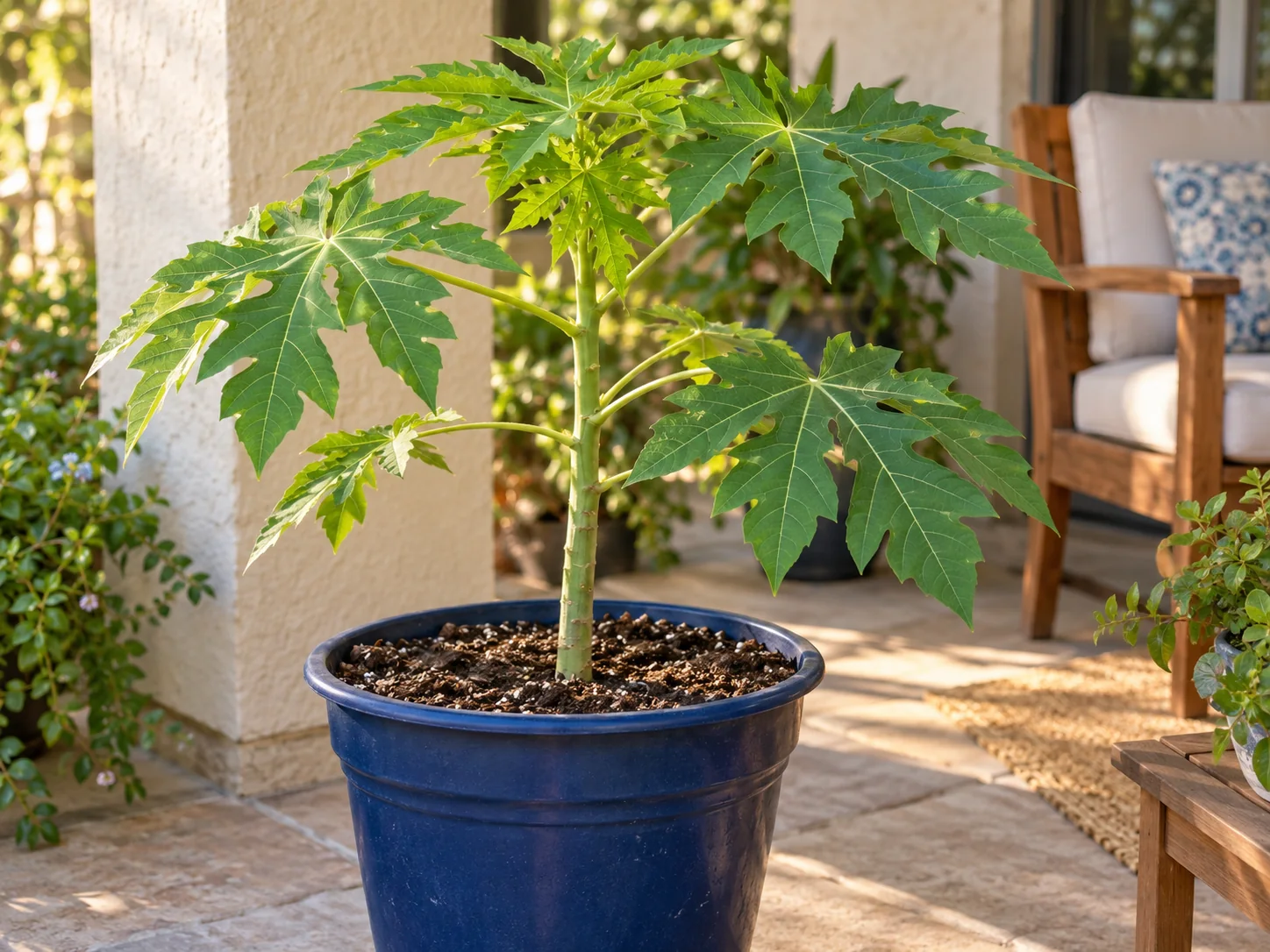
A gardener in South Florida may have a very different growing season from someone in Minnesota or the Pacific Northwest. Rather than relying on a nationwide planting month, watch the actual overnight temperatures. Move a young container plant outdoors only when weather is consistently warm, then acclimate it gradually to sunlight and wind.
Bring container papayas indoors before nights routinely approach 50–54°F (10–12°C). Do not wait for frost. Bright windows or suitable grow lights can help through winter; growth may slow significantly under weak indoor light. Papaya remains a tropical evergreen rather than a plant that benefits from a cold dormant season.
After the move indoors, reassess how the pot dries rather than continue the patio routine. The guide to winter watering under windows and grow lights explains that transition. A tropical papaya still needs suitable warmth and light; reducing water is not a substitute for either.
Will an indoor papaya ever produce fruit?
Papayas can bear male, female, or bisexual flowers, so an individual seedling may not set fruit without the right floral characteristics and sometimes pollination. Fruit development also takes sustained warmth, intense light, nutrients, and generous space.
In an ordinary house, these requirements are difficult to meet year-round. Judge early success by healthy growth and a strong root system rather than a guaranteed harvest date. Tropical outdoor success stories do not automatically apply to a small pot in a heated room.
FAQ
Frequently asked questions
Yes, but first rinse away the slippery coating and fruit residue. Sow in a warm, loose, well-drained seed-starting mix.
A soil temperature around 77–86°F (25–30°C) encourages germination. Keep moisture even without saturating the pot.
Only in reliably warm, frost-free conditions. Container plants elsewhere should come indoors before chilly nights; they cannot tolerate freezing.