First, check whether the pot is wet or dry
If a houseplant wilts while its potting mix is still wet, stop and investigate before watering again. Check the inner pot, its drainage holes, and any water trapped in the decorative outer container. A thirsty-looking leaf cannot tell you whether the roots are dry, damaged, or sitting in poorly aerated mix.
Root rot is deterioration of roots associated with disease; prolonged waterlogging can also injure roots directly. These problems can occur together, but a home inspection cannot identify the organism responsible. This guide is for common houseplants in potting mix. Orchids in bark, carnivorous plants, and hydroponic systems need advice specific to their growing method.
Start a simple record before changing anything: when you last watered, whether the pot feels unusually heavy, and whether decline began after repotting or a move. That gives a local adviser more useful information than a photograph of one yellow leaf.
Which signs make root damage more likely?
Persistent wilting in moist mix, stalled growth, and several leaves deteriorating together justify looking below the surface. A soft or darkening stem base is more concerning than an isolated old leaf turning yellow. Leaf symptoms alone overlap with light problems, temperature stress, drought, and other causes.
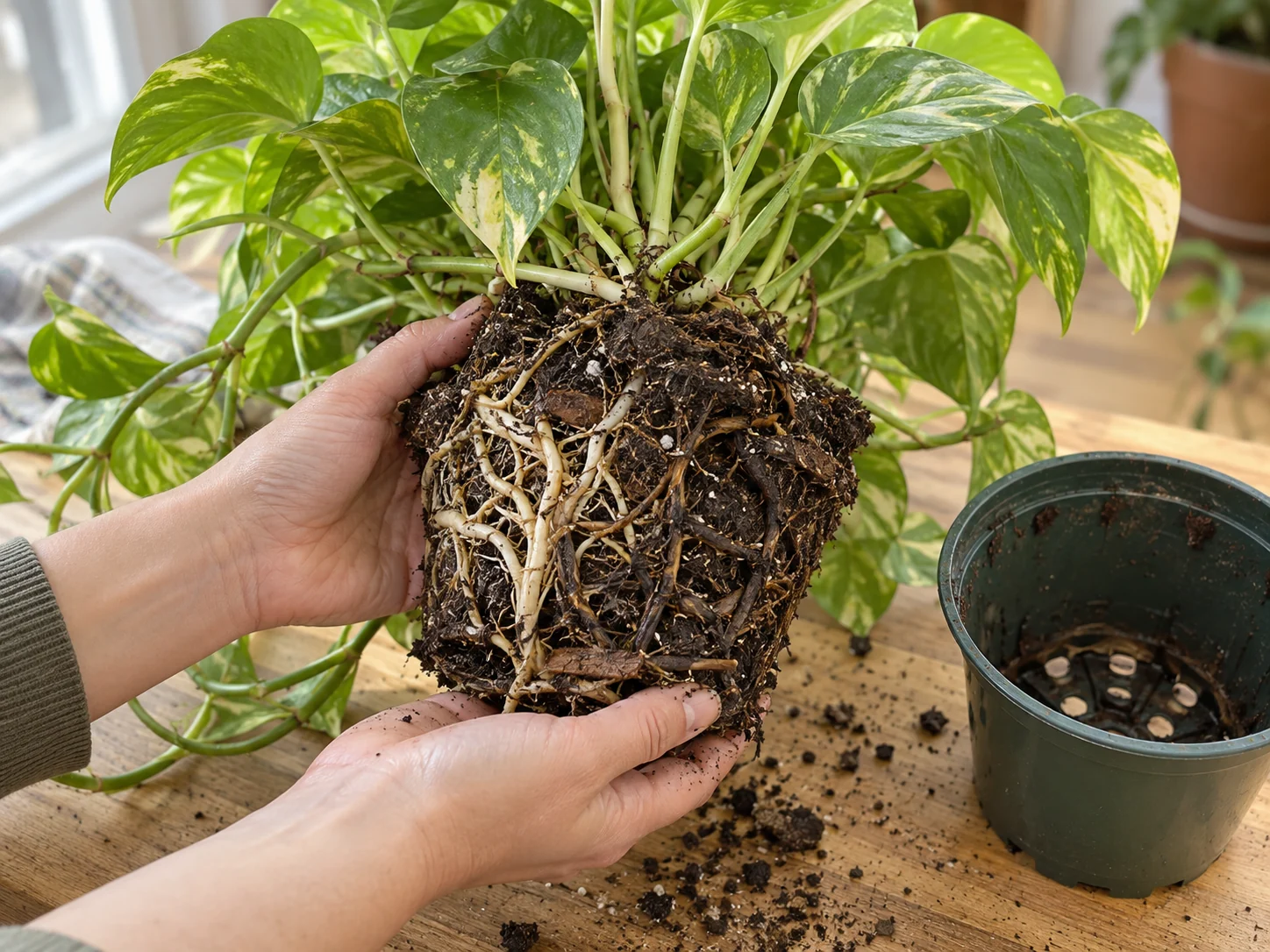
If the plant continues to decline, support it while sliding the root ball out of the nursery pot. Gently squeeze a flexible pot first; do not pull a resistant plant by its stems. Work somewhere you can collect the old mix, away from other open pots.
Look for roots that collapse under gentle pressure, feel mushy, or lose their outer covering. Compare suspect areas with firm roots on the same plant. Color is supporting evidence, not a pass-or-fail test: healthy roots vary between species and can be stained by their medium. A smell may accompany decay, but its absence does not prove that roots are sound.
Inspect the base as well as the roots. If the entire root system has deteriorated or damage extends into the crown, a routine repot is unlikely to solve the problem. Do not promise yourself a rescue simply because the leaves are still green.
Choose between changing care, attempting recovery, and discarding
If roots are firm and the plant has no progressing decay, correct the conditions first. Empty trapped water and review light, pot size, and the mix's drying behavior. Repeatedly unpotting an otherwise sound plant adds disturbance without clarifying a leaf problem.
A recovery attempt is more reasonable when a meaningful portion of the roots remains firm and the stem base is sound. Keep the affected plant separate while working, use clean tools, and remove clearly dead or collapsing roots without cutting healthy ones merely to make the root ball look tidy. Recovery is uncertain; repotting is not a verified cure for every root disease.
For extensive decay, replacing the plant can protect the rest of a collection and avoid repeated treatments. Some species can be propagated from genuinely healthy, unaffected tissue, but a cutting taken through a discolored or soft stem is not a clean restart. For a valuable plant or repeated losses, seek a local plant diagnostic service before guessing at a treatment.
If you repot, size the container for the roots that remain
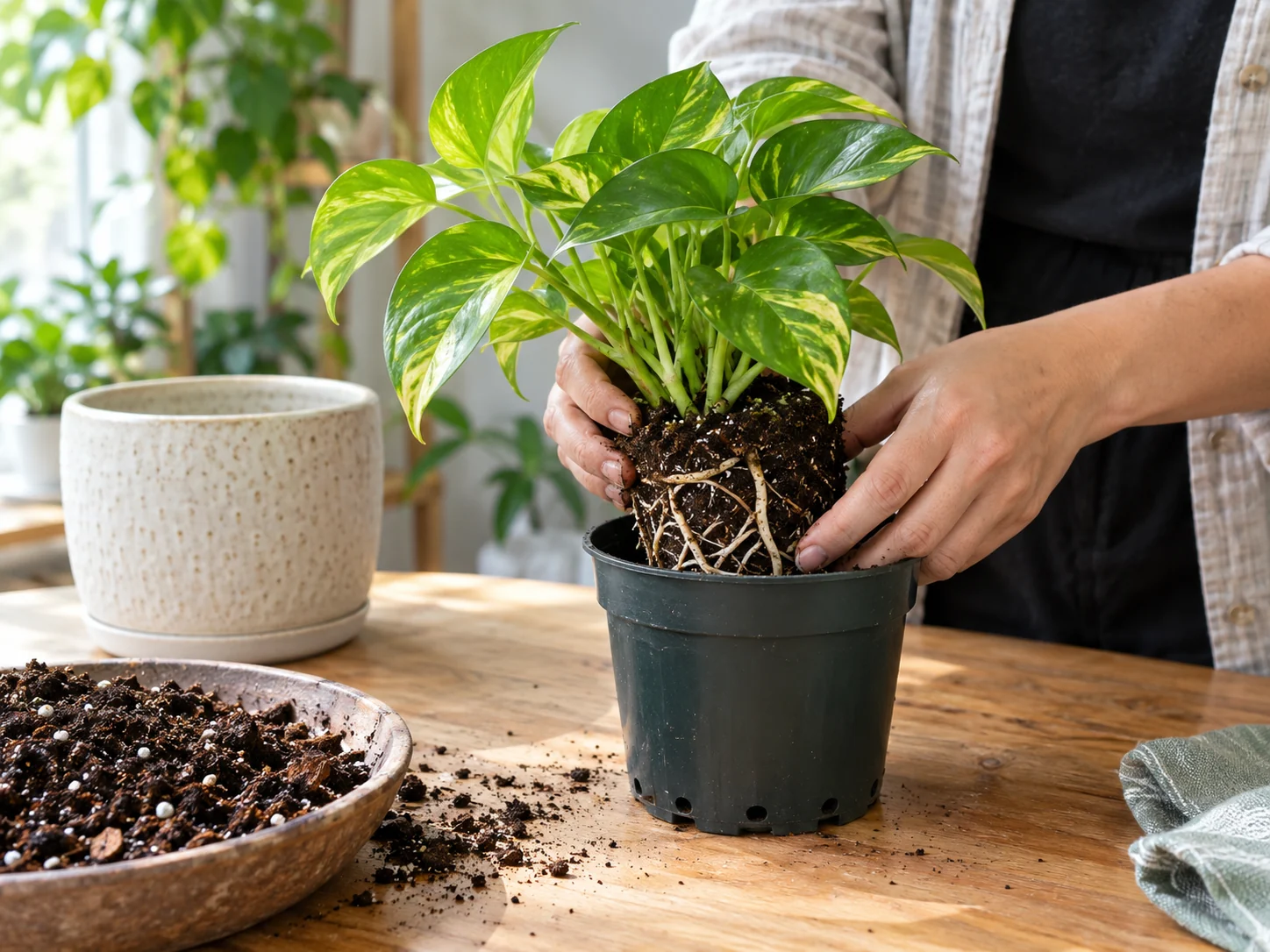
Prepare a clean container with open drainage holes and fresh mix appropriate to the species. A plant that has lost roots does not automatically need a larger pot. Choose a container that accommodates the remaining system without surrounding it with a large volume of unused, moisture-holding mix.
Remove loose deteriorated medium carefully rather than scrubbing every healthy root bare. Discard suspect mix and drainage water; do not transfer either to neighboring pots. Keep the stem at its appropriate planting depth. A gravel layer cannot compensate for blocked holes or an unsuitable medium.
After repotting a leafy houseplant, settle the fresh mix with appropriate watering and allow excess water to drain. Do not apply this as a universal instruction for wounded succulents or other plants with different aftercare. Clean the work area and tools according to suitable hygiene instructions before using them on another plant.
Judge recovery by the trend, not tomorrow's leaf color
Give the plant a stable position with suitable light and temperature, then check it without repeatedly disturbing the roots. Note whether decline stops, the mix begins drying more normally, and new growth eventually appears. An already damaged leaf may remain yellow even when conditions improve; removing the cause does not restore that leaf's original color.
Avoid stacking experiments: a new location, a fertilizer boost, a chemical drench, and another repot at the same time make the result hard to interpret. Fertilizer does not rebuild rotted roots. Household disinfectants and improvised root baths are not a default rescue method.
Arrange your next watering around the species and the actual condition of the pot. Lower light, cooler rooms, larger containers, and a slower-growing plant can change how long moisture remains. The same reminder that worked in an airy, bright room may keep a recovering plant too wet elsewhere.
Once the immediate root problem has been addressed, reassess the conditions that kept the pot wet. Our winter watering guide explains why an old summer interval can become unsuitable after a move indoors or a reduction in daylight. A recovering plant should still be judged by its remaining roots and actual moisture use.
FAQ
Frequently asked questions
No. Check the wider pattern, moisture, and growing conditions. Root deterioration requires examining the roots; leaf color alone cannot identify a disease.
Sometimes, if enough sound roots and healthy stem tissue remain and the underlying conditions are corrected. Extensive root or crown decay makes success much less likely.
No. Root color varies and can be affected by the medium. Firmness and intact structure matter; soft, collapsing roots are more concerning than brown color alone.
Not as a universal rule. Avoid waterlogging while meeting the species' needs. Prolonged drought can further damage a leafy plant with a reduced root system.