A spooky plant should still suit your home in November
The best Halloween houseplants get their character from real leaves, roots and growth habits. Snake-like markings, dangling plantlets and dramatic leaf openings can do more than a layer of artificial cobwebs. Start with a plant you can grow well, then add a removable decoration beside the pot.
This is a selection of living houseplants, not a list of rare plants to buy solely for a party. A small specimen may not look like a mature one, and a dramatic product photograph does not tell you how much light your shelf receives. Look for a botanical name and inspect the plant itself. Each link below leads to its Ogrodio plant profile, where you can check care and safety separately from the Halloween styling.
Halloween also means different growing conditions around the world. Late October can bring falling daylight in a northern temperate home, increasing light in the Southern Hemisphere, or a wet or dry season in the tropics. The indoor window, temperature and root ball are more useful care signals than the date alone.
1. Snake plant: the pattern is already there
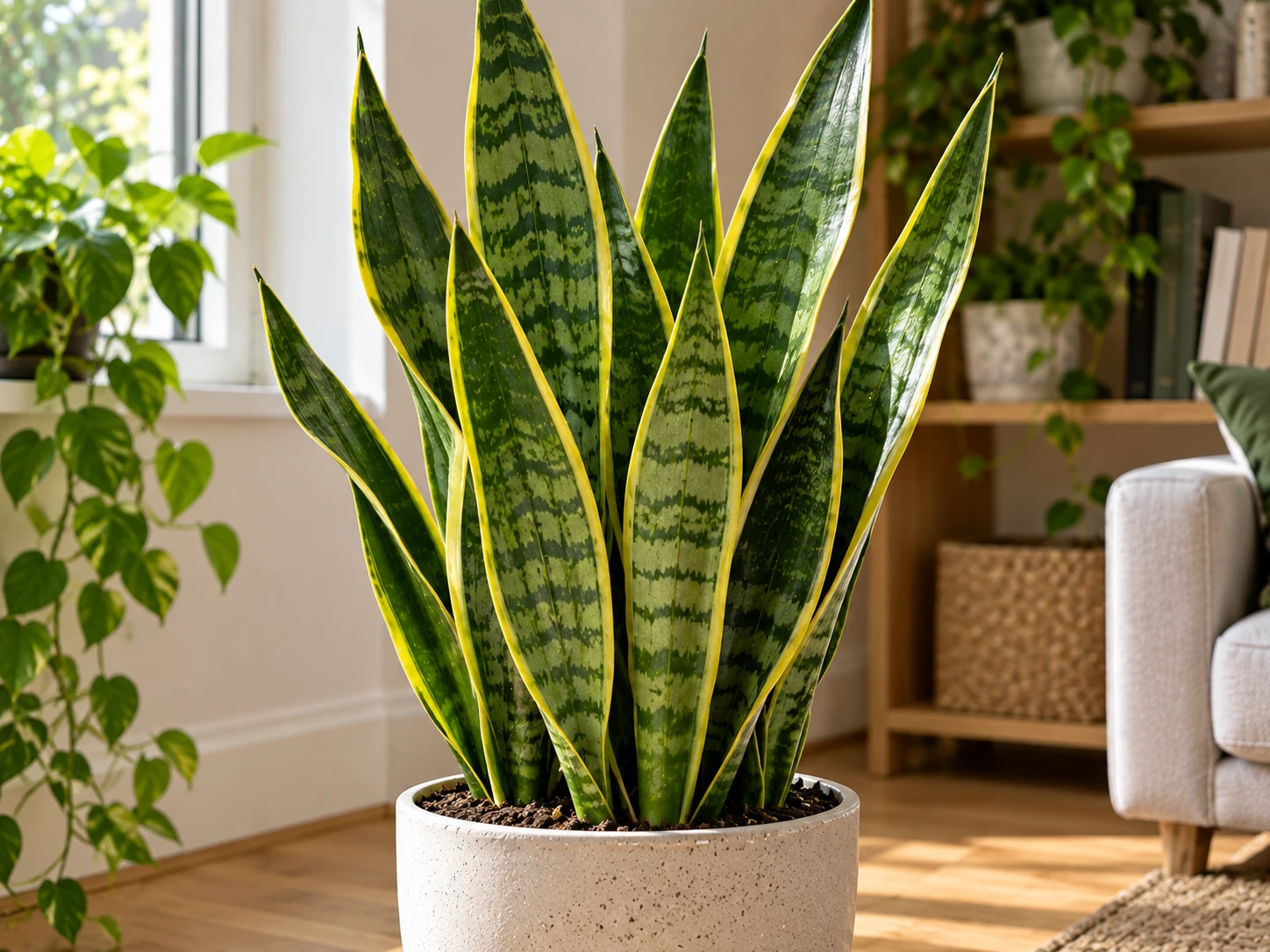
A snake plant, Dracaena trifasciata, supplies upright, blade-shaped leaves and mottled bands without any added props. Set a tall specimen against a plain wall to make the outline readable. Compact rosette forms create a different effect; choose the actual plant rather than assuming every snake plant grows into tall spears.
Use a pot with drainage and allow the mix to dry between waterings. A dark decorative container must not conceal a reservoir around the roots. In a cool, dim room the interval between waterings may become much longer than in a warm, bright one. Do not turn that observation into a single monthly rule for every home.
Place stiff leaf tips away from eye level for children and keep the plant out of pets' chewing range. The snake reference is a common name, not an indication that the plant is harmless to animals.
2. Spider plant: let the plantlets provide the drama
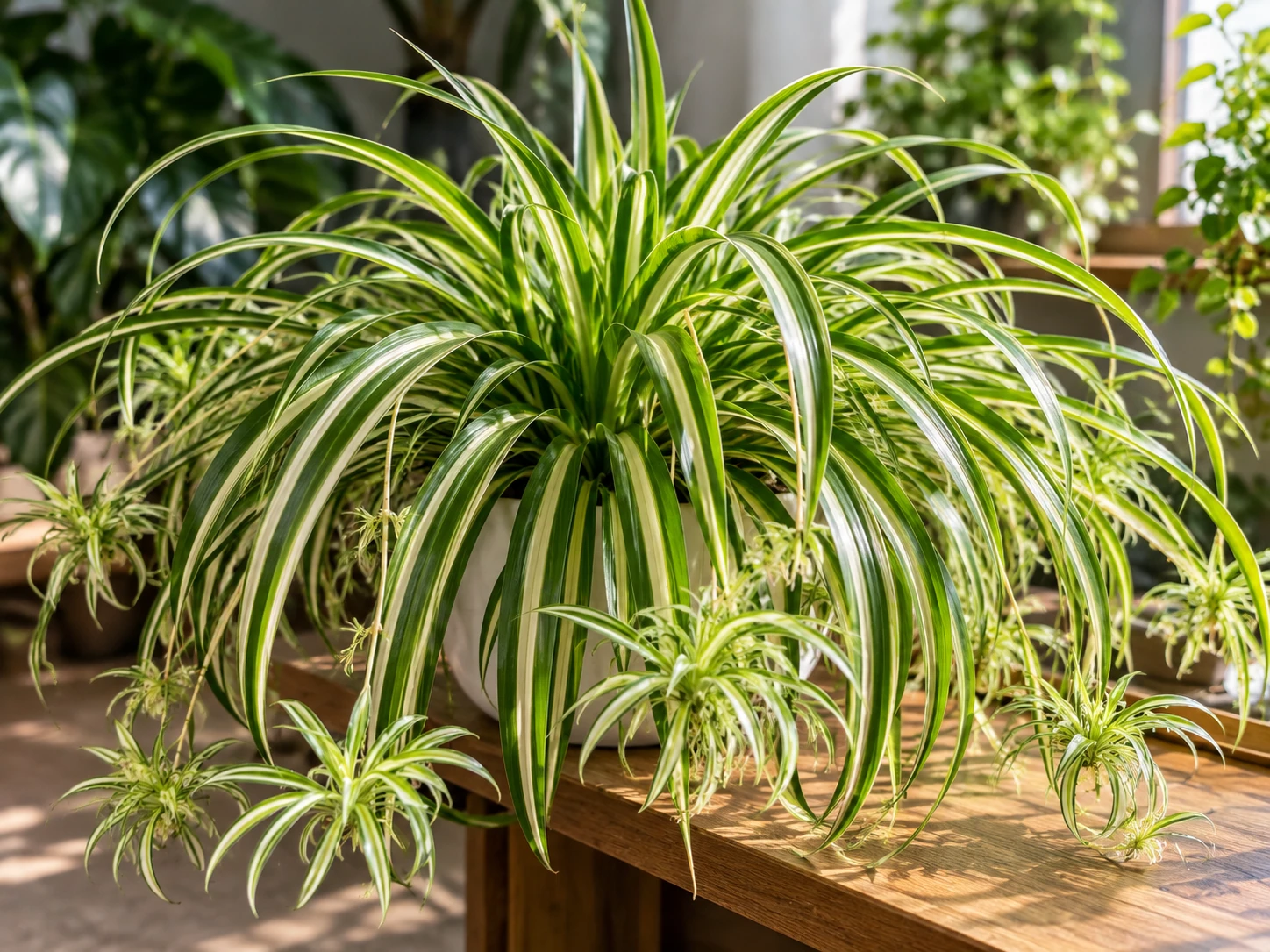
Long stems carrying miniature plants make Chlorophytum comosum a natural choice for a hanging Halloween display. The effect works best with an established spider plant that already has offsets. A small nursery pot cannot be expected to produce a curtain of babies on a holiday deadline.
Choose a secure hanger and a position with useful indirect daylight. Keep the plantlets out of a doorway and away from a pet's favorite launch point. Remove the pot for watering, let it drain, and put it back without dripping onto electronics or extension cords. Decorative dark ribbon can go on the hanger, but should not tighten around stems.
If you later propagate a plantlet, wait until it has suitable roots or root it under appropriate conditions. Cutting off every dangling baby immediately after the party is unnecessary; they are part of the plant's normal growth, not expired decorations.
3. Monstera: a ready-made monster silhouette
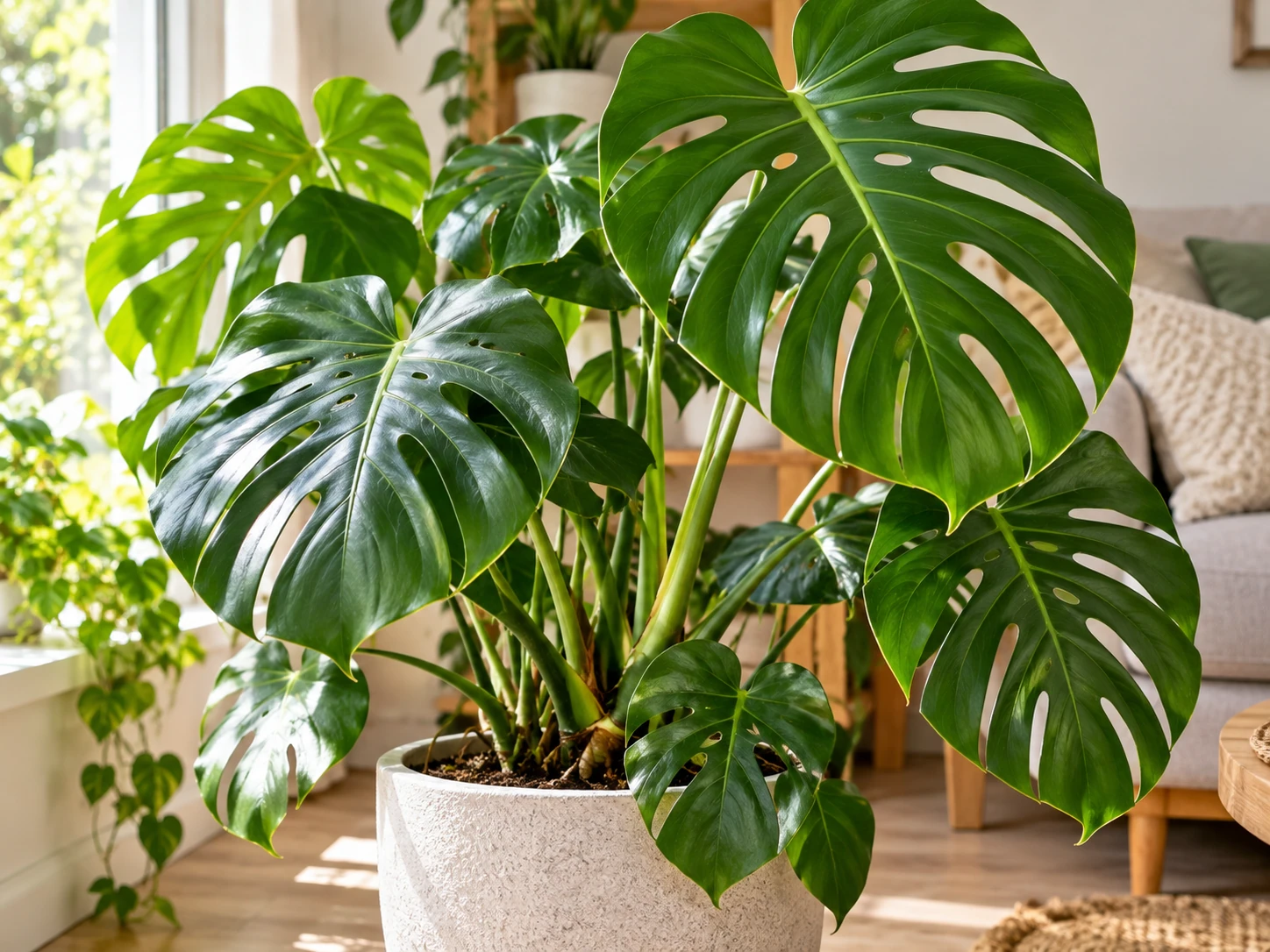
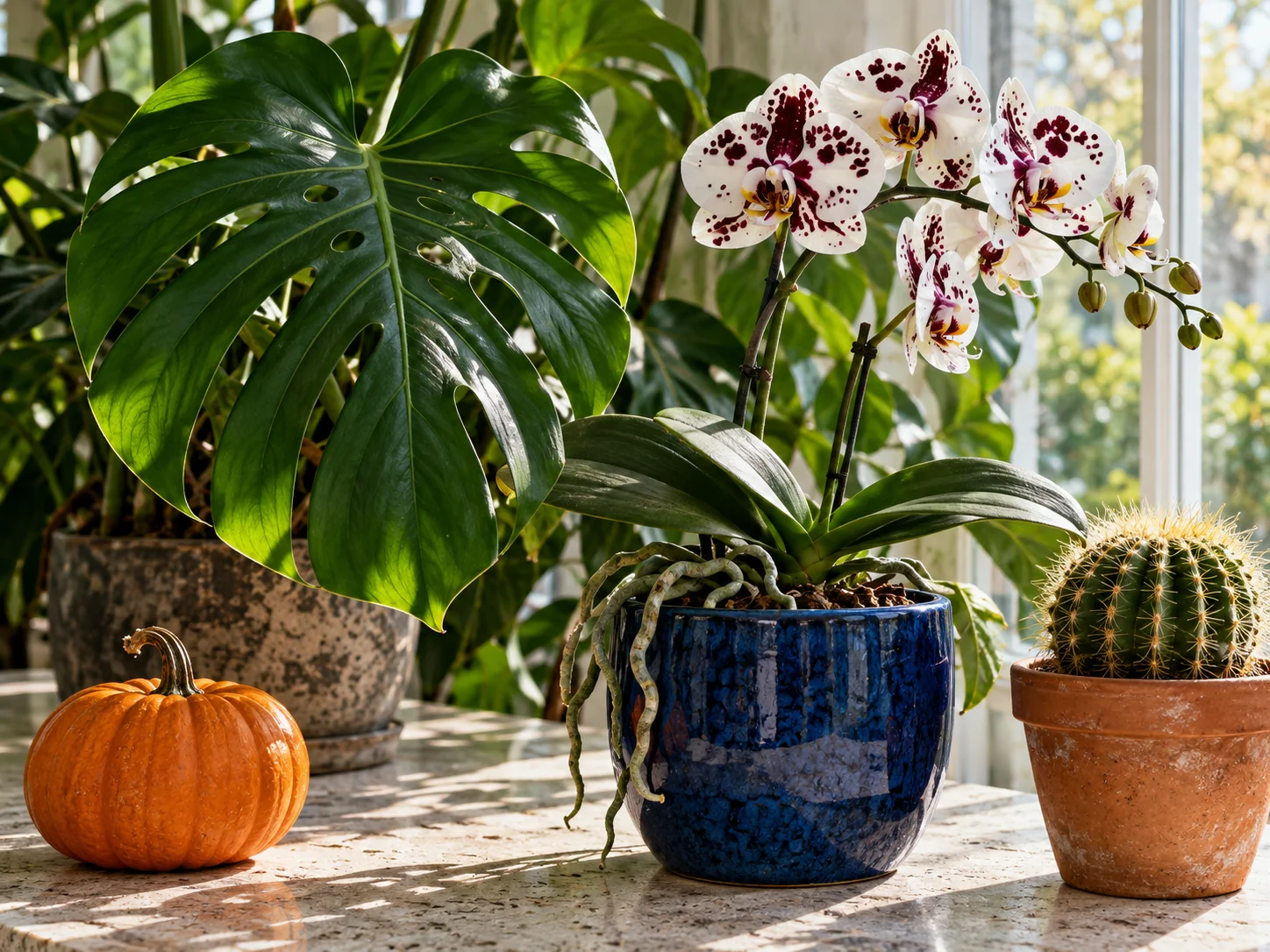
A mature Monstera deliciosa offers large split leaves, internal openings and aerial roots. One healthy leaf can carry the whole display. Young plants often have much simpler leaves, so inspect the specimen if fenestrations are the reason you are buying it.
Give the climbing stems suitable support and enough space to grow. Do not cut extra holes into a leaf or trim healthy aerial roots merely to fit a prop. A dark backdrop can stand behind the plant without covering the window that lights it. Arrange string lights independently rather than binding them to leaf stalks.
Monstera belongs outside reach of children and animals that chew foliage. This display is about ornamental leaves; the species' edible-fruit associations do not make its leaves or immature tissues party food.
4. Moth orchid: pale flowers and silver roots
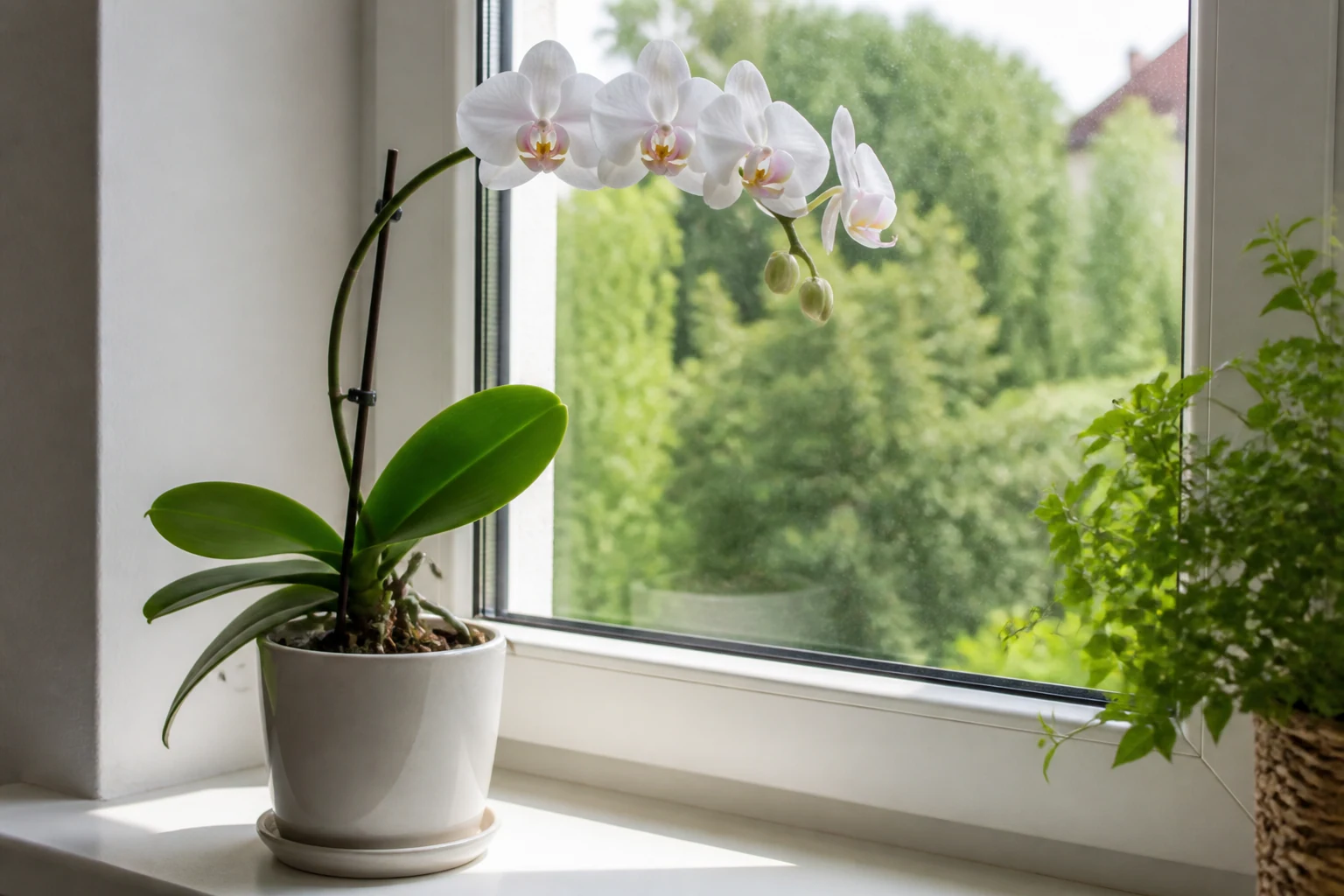
White or heavily spotted moth orchids, Phalaenopsis hybrids, make a gentler haunted-house display. Their curved stems and aerial roots look unusual without being altered. Keep the flower spike supported if needed, and choose an already flowering plant when you need an immediate result.
The exposed roots are not dead simply because they look silvery when dry. Assess firmness, growth and the moisture inside the pot before deciding what to cut. Keep the orchid in its suitable airy medium; ordinary dense potting soil is not an interchangeable substitute. After watering, empty the decorative outer container.
A moth orchid is not a Dracula orchid. Those are different orchids with different requirements. The common moth name is enough for this theme without inventing a rare identity or promising that a supermarket hybrid has the needs of a cool-growing specialist.
5. Aloe: a small creature with toothed leaves
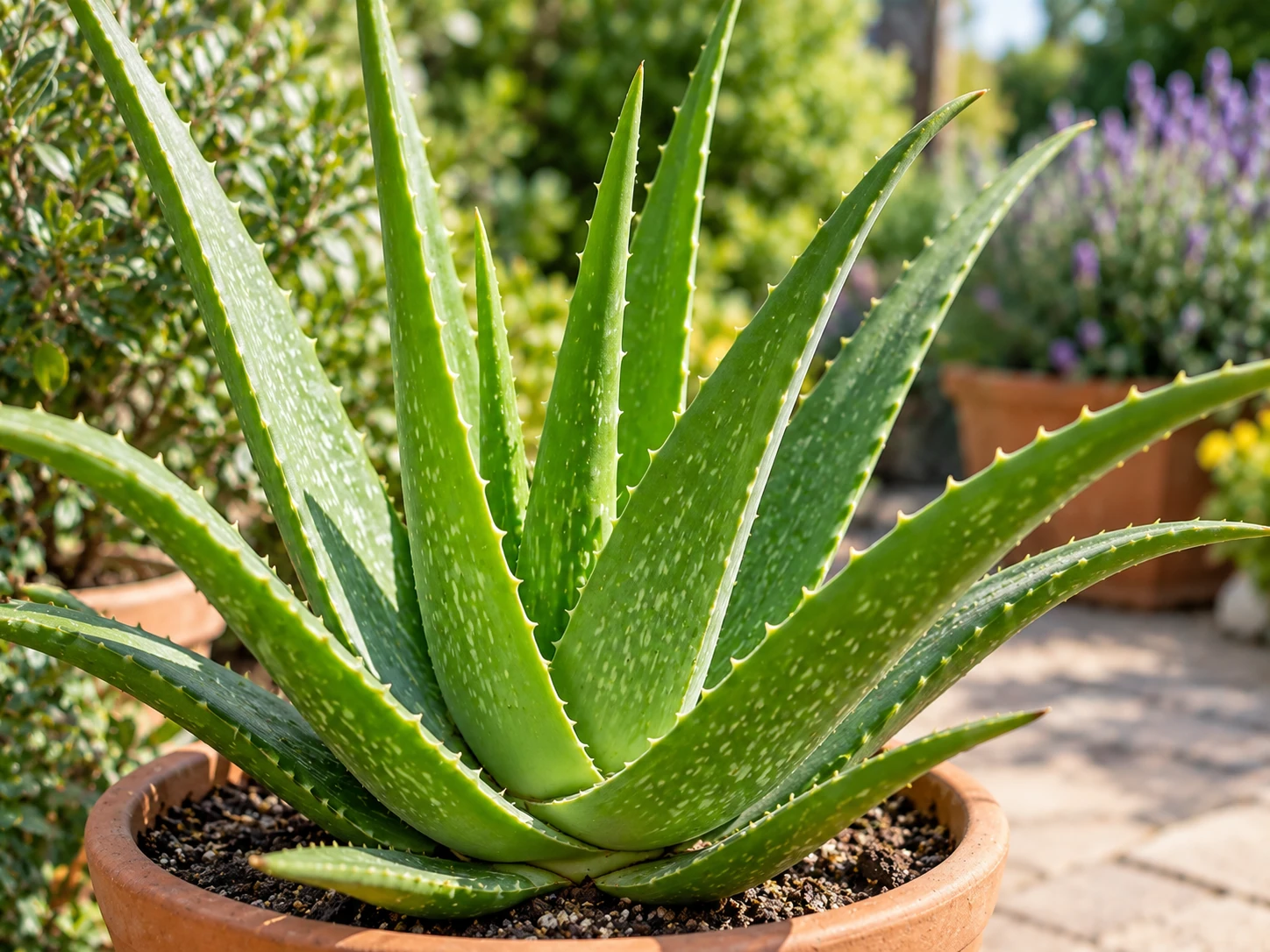
The fleshy rosette of Aloe vera provides a strong shape on a bright windowsill. Its toothed leaf margins work well beside a smooth ceramic pumpkin. Use the plant's existing shape rather than cutting or piercing leaves to add eyes.
Choose freely draining mix and let it dry between waterings. Acclimate a newly purchased plant gradually before exposing it to much stronger sun. In hot regions, a window or outdoor wall can become far harsher than the store shelf where it was grown. In low-light homes, a brighter growing position matters more than a larger pot.
Keep aloe out of reach of pets and do not harvest the leaves for Halloween drinks. An ornamental nursery plant is not automatically a food-grade ingredient, and the plant contains tissues that are unsuitable for casual consumption.
6. A cactus: spines belong off the snack table
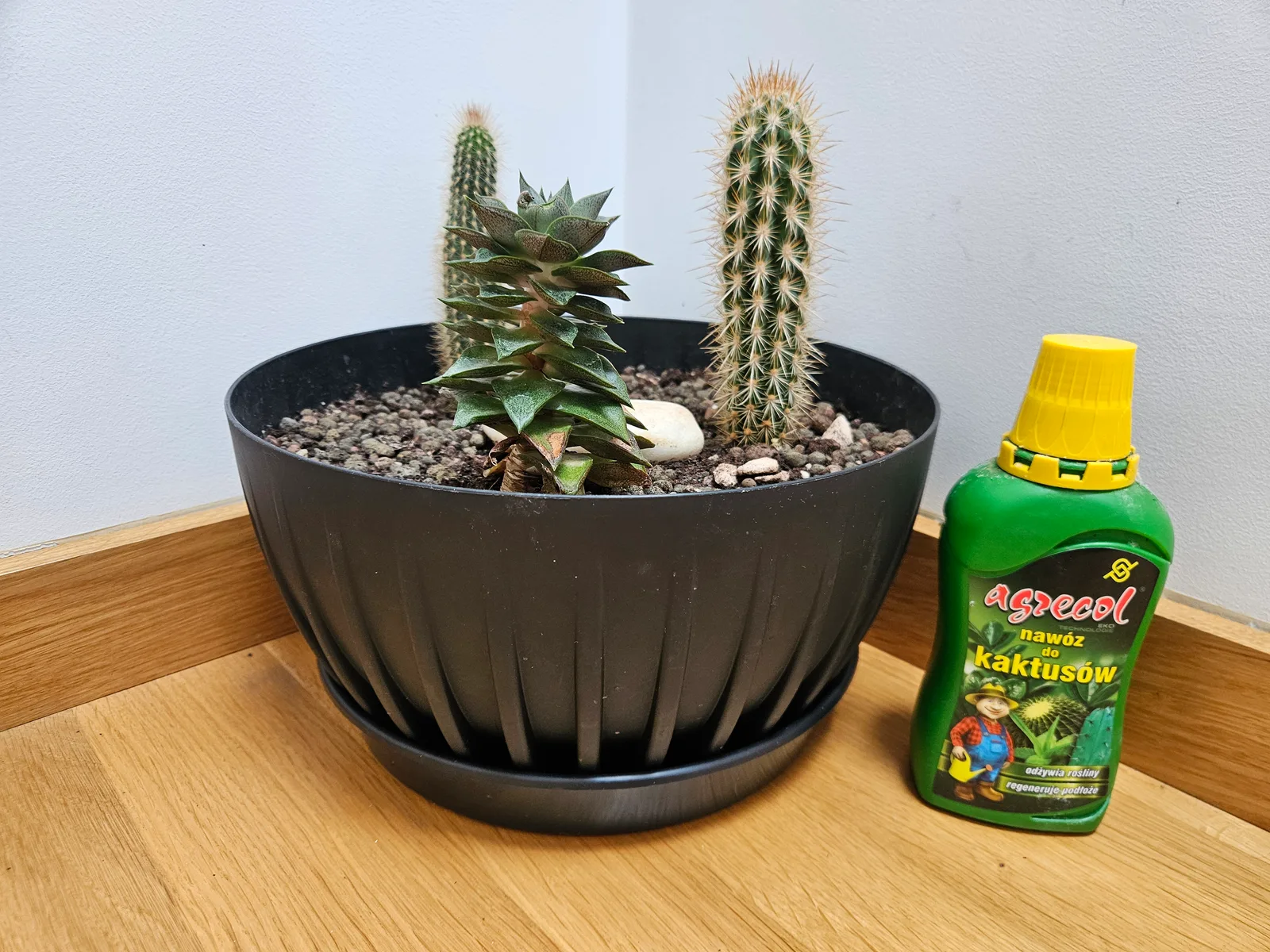
A compact ribbed cactus can create a miniature creature-like outline. Start with an undyed plant without glued-on flowers. The Ogrodio cacti profile covers a broad family, so obtain the genus or species from the seller before deciding on light, watering or a cool rest period.
Do not treat all cacti as identical desert plants. Forest cacti and many dry-habitat species have substantially different requirements. Never put an unidentified cactus outdoors in cold weather because a general article mentions winter rest. Where temperatures stay warm all year, the relevant care pattern may instead follow actual growth and local rainfall.
Keep spiny specimens away from food, crowded walking routes and places where a hand might reach without looking. A stable container on a bright, separate shelf is more useful than a tiny cactus balanced between drinks. Its own pot also prevents the wetter care of neighboring foliage plants from becoming its watering routine.
7. Flamingo flower: a red accent with real structure
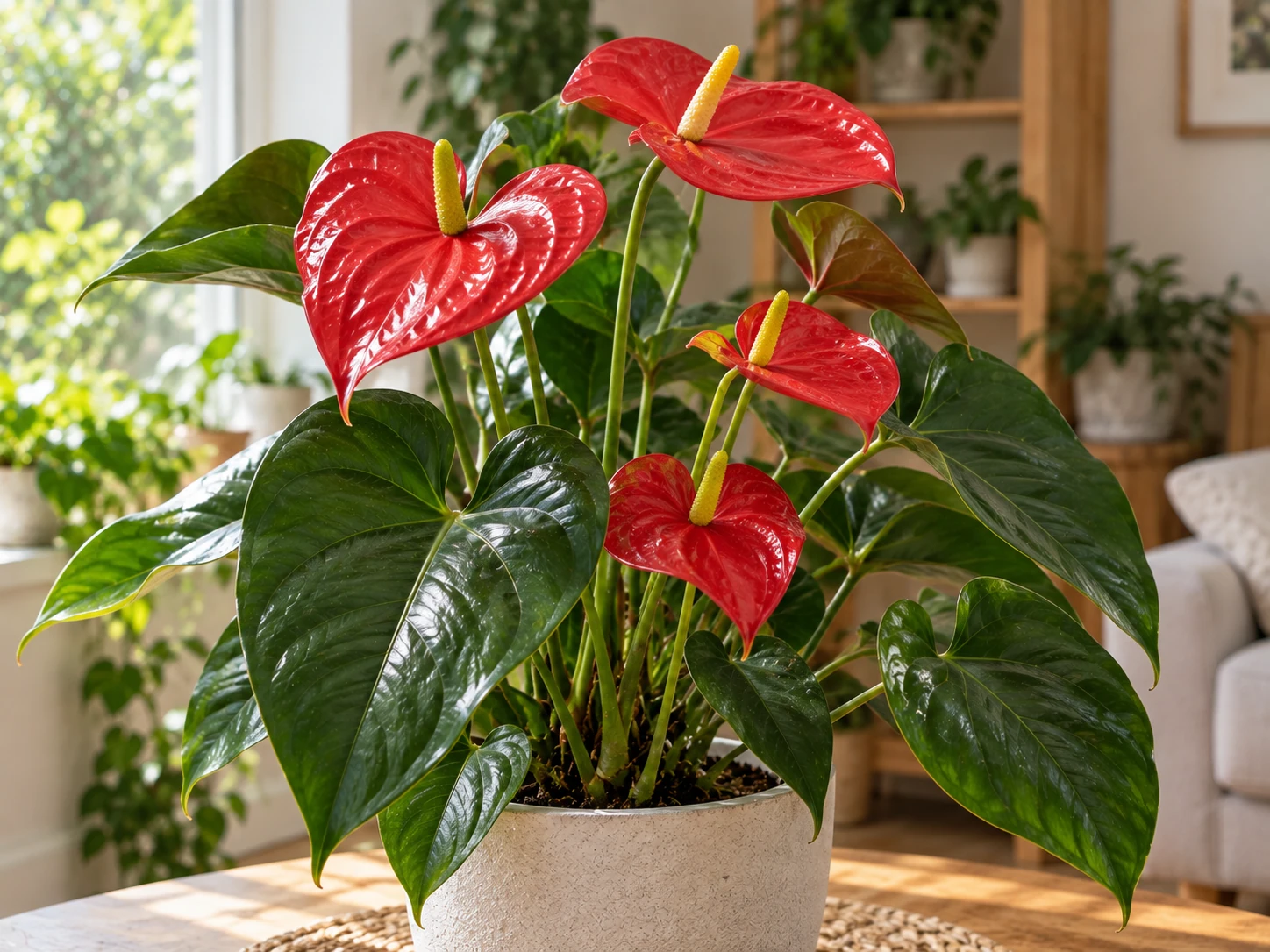
A red-flowering Anthurium andraeanum hybrid gives you a vivid accent without paint. The colored structure is a spathe surrounding a spadix, not one enormous petal. Colors differ between cultivars, so pick a plant already showing the shade you want.
Give it bright filtered light and an airy root environment with drainage. Do not respond to dry room air by repeatedly saturating wet mix. Air-conditioning outlets can be as disruptive as heating vents: position the plant away from a direct blast. This matters in tropical and subtropical homes as much as in heated temperate apartments.
Anthurium contains irritating calcium oxalate crystals and is unsuitable for chewing or edible decoration. Keep it away from a buffet where guests could mistake a detached plant part for a garnish, and clear fallen material promptly.
8. Golden pothos: a trailing vine for the haunted bookshelf
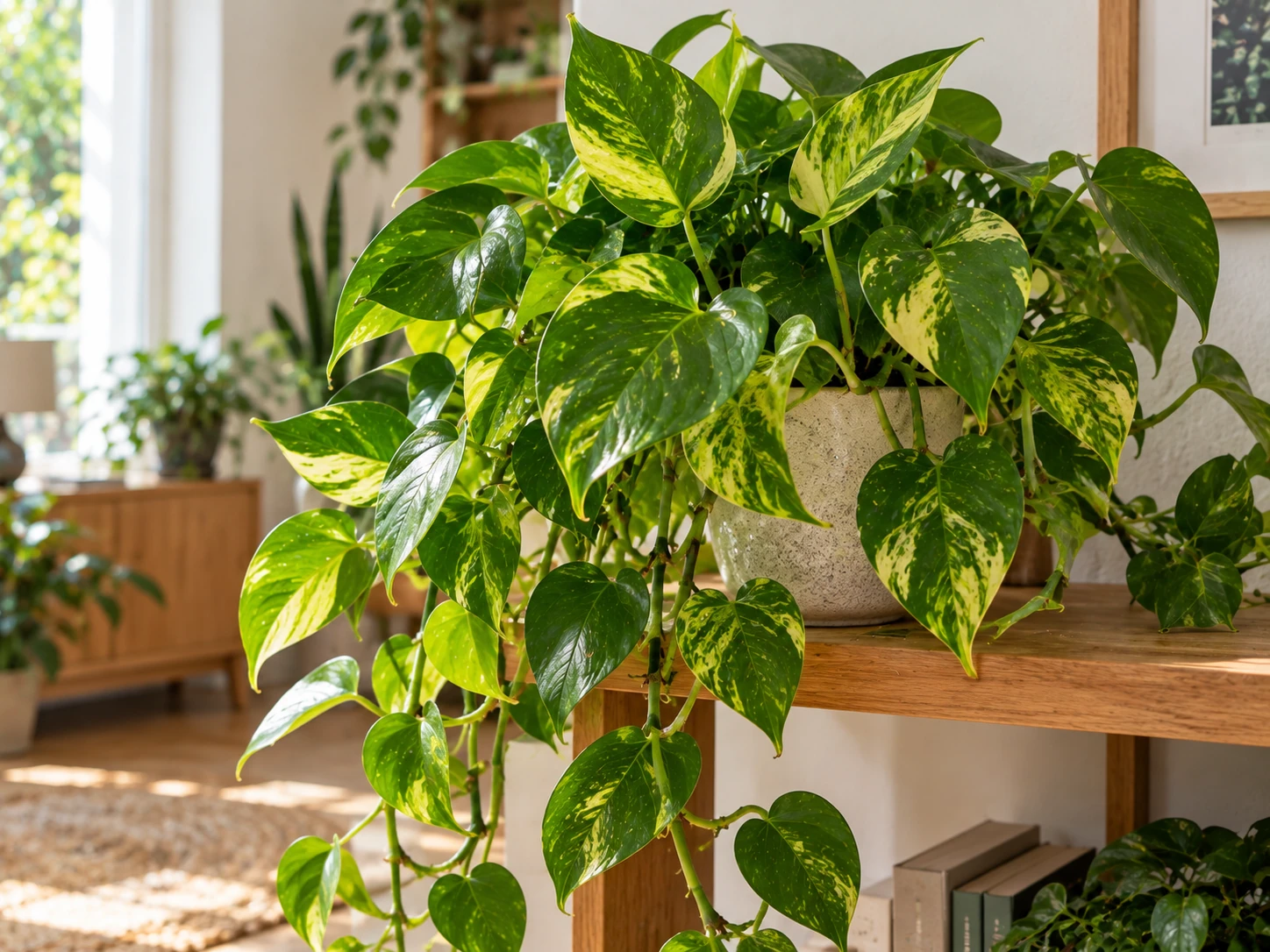
Golden pothos, Epipremnum aureum, can frame a shelf with long leafy trails. Use an established vine and leave slack at its supports. A plant does not need to be black to look atmospheric against a dark background.
Do not staple vines, tape leaves to furniture or force a stem into a sharp bend. Keep the pot accessible so you can check drainage. Pothos tolerates a range of indoor conditions, but a permanently dark display is not a good growing location. Watch the actual light on the foliage rather than the brightness of the room to your eyes.
Long stems can defeat an otherwise high, pet-inaccessible shelf. Check where the ends hang. Pothos should not be chewed, and it should not be released into outdoor vegetation after the party; restrictions and invasive potential vary by location. Keep it as a managed container plant and follow local disposal guidance for cuttings.
9. Dragon scale alocasia: a living reptile-skin effect
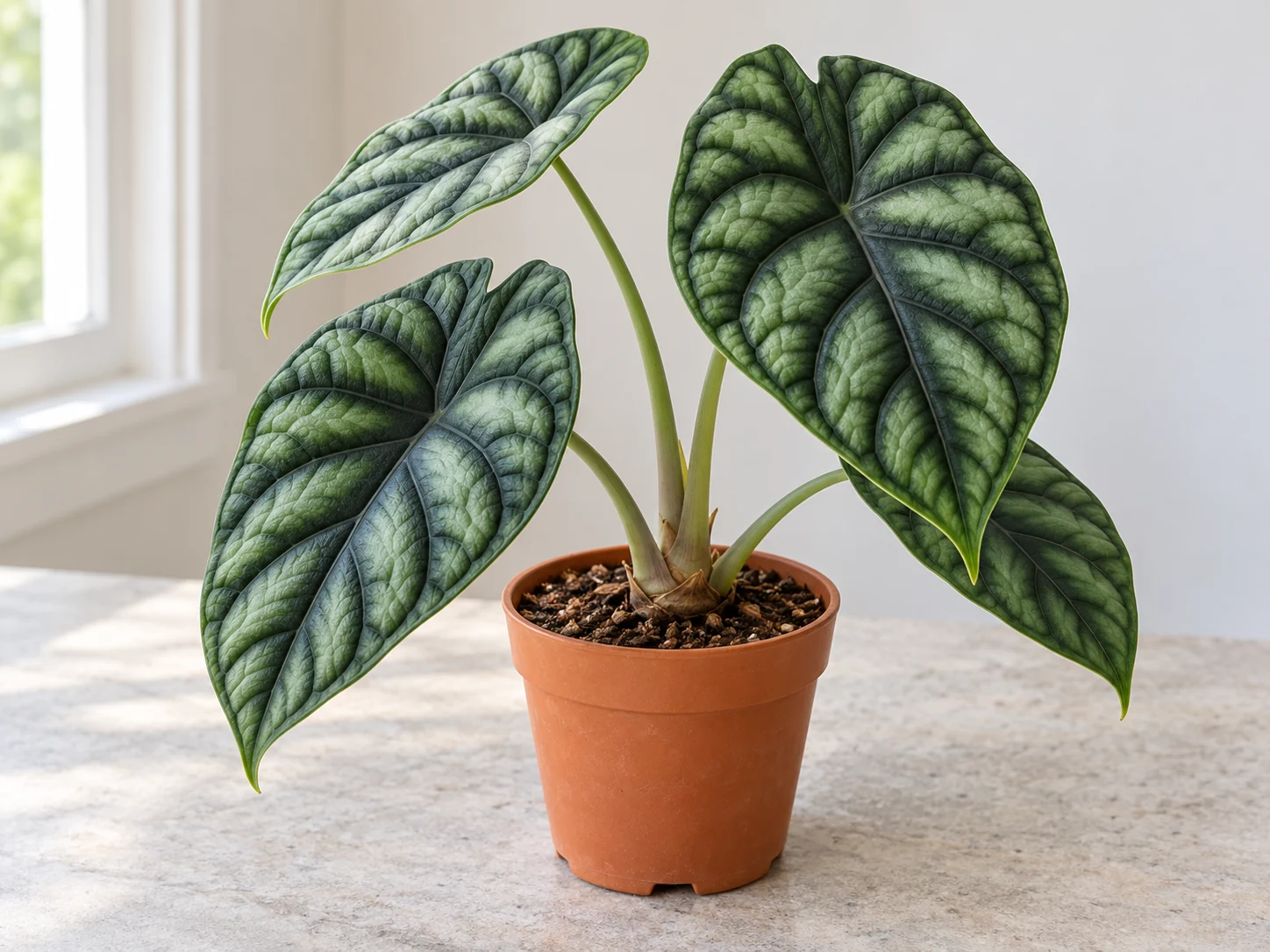
The raised leaf panels and dark veins of dragon scale alocasia, Alocasia baginda, create a detailed creature-like effect without anything attached to the plant. Place it where filtered side light reveals the texture. Look for the botanical name and selection on the label: other plants sold with Dragon in the name are not automatically baginda.
This is a choice for someone who can maintain warmth and monitor both room humidity and root moisture. Do not buy it for a permanently dark corner or repeatedly drench its roots to compensate for dry air. A Northern Hemisphere heating season, a Southern Hemisphere brightening window and a tropical air-conditioned room can all produce different drying rates. Observe the plant and mix. Alocasia tissues should not be eaten or chewed by pets.
10. Eyelash begonia: strange detail on a small scale
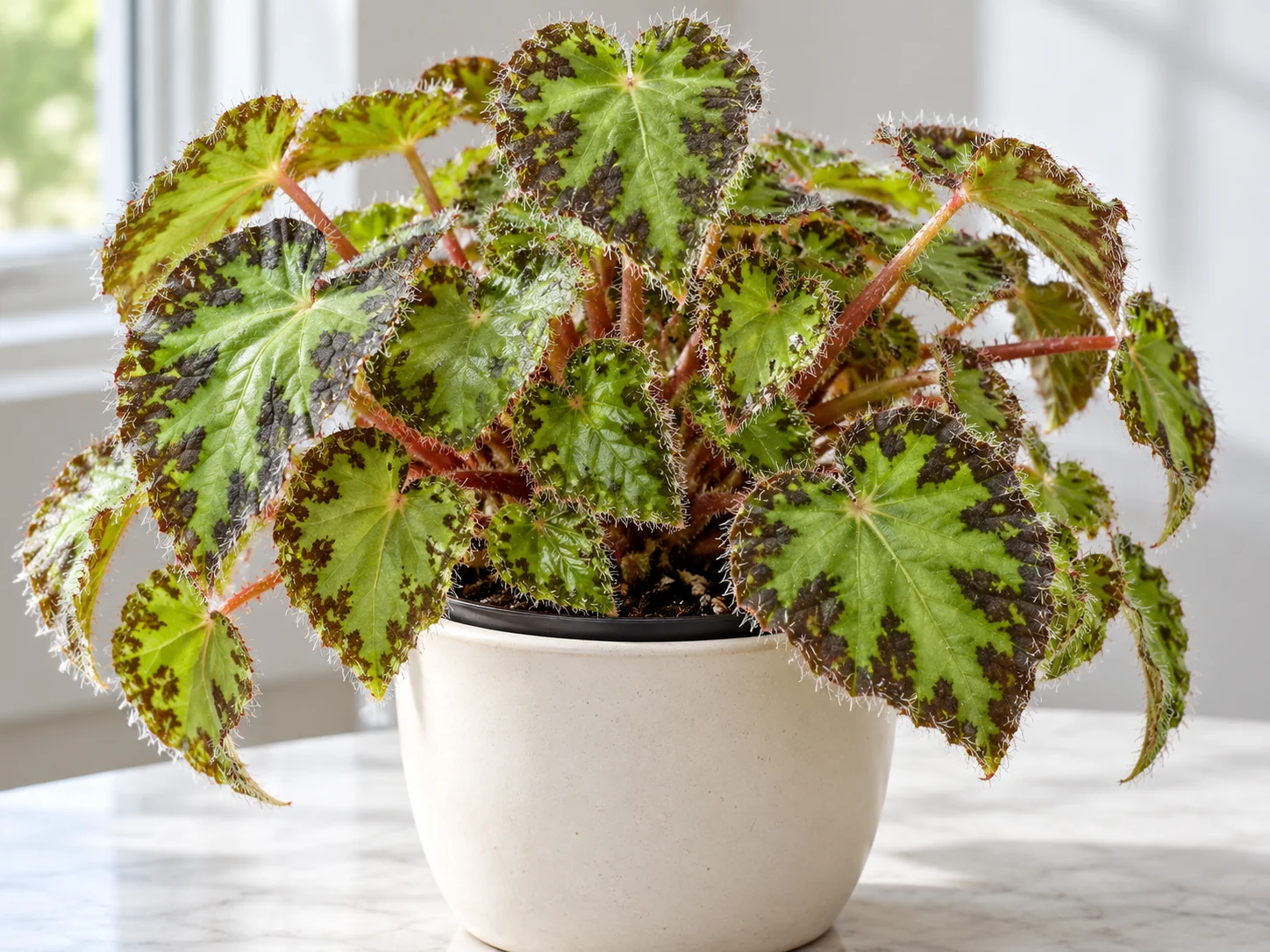
Eyelash begonia, Begonia bowerae, earns its place through the fine hairs edging its asymmetric patterned leaves. Dark markings give the small mound a creature-like character when seen close up. It suits a compact display better than an oversized floor plant, provided it still receives useful filtered daylight.
The creeping rhizome belongs near the mix surface, not buried under decorative moss and wet potting soil. Allow slight surface drying, keep runoff moving away, and avoid leaving the foliage wet in stagnant air. This is not a dormant garden begonia tuber to store dry and dark after October. Keep the whole pot and any loose rhizome pieces away from chewing pets: begonias are classified as toxic to cats and dogs if eaten.
Make a display without making a shared watering problem
Keep every plant in its own draining nursery pot, with separate outer containers if desired. Arrange the pots on a broad waterproof tray, using secure height differences to show the leaves. Avoid planting aloe, cactus and a moisture-loving foliage plant into one mixed bowl. Their matching colors do not create matching root needs.
Use battery-powered LED candles rather than open flames near foliage, curtains and dry props. Keep cables dry and use equipment suitable for the setting. Leave spray paint, glitter, glue and synthetic webbing off living tissues. A real pumpkin should sit separately from the potting mix and be removed if it starts to soften or leak.
For a short party display, return each plant to its appropriate position afterward. If you want the arrangement to stay for weeks, build it where the plants can actually grow. Our houseplant watering guide explains how to check roots, mix and drainage instead of copying a fixed schedule.
After Halloween: use the local growing conditions
In a northern temperate home, shortening days may slow water use while a heating vent dries one side of a plant. In the Southern Hemisphere, October can coincide with increasing light and active growth. In a humid tropical setting, slow drying and poor airflow may be more relevant than either seasonal story. Check at the plant, not just on an outdoor weather app.
Before buying, decide which pot you can keep, where it will live, and whether household members can reach it. Several plants here are irritating or toxic when chewed, so read the individual safety profiles. A display is only practical if it remains manageable after the guests leave. One healthy plant in the right place is a better long-term purchase than a group of unsuitable ones bought to finish a theme.
FAQ
Frequently asked questions
A compact snake plant can provide a strong outline with little floor space, provided you can give it suitable light, drainage and protection from chewing pets. A spider plant suits a secure hanging position instead.
That depends on your location, temperatures, exposure and the individual species. October is not a universal autumn month. Do not move tropical plants into cold conditions solely for decoration.
Only if you can meet its specific needs. Venus flytraps and different pitcher plants are not interchangeable houseplants; water quality, substrate, light and seasonal rest need separate research. A dramatic trap is not a reason to skip identification.