Can you eat the peppers on a Capsicum Sombrero plant?
Many ornamental peppers belong to Capsicum annuum, the species that also includes familiar sweet peppers and chilies. Their decorative appearance does not make their fruit inherently poisonous. However, botanical edibility and the suitability of a particular store-bought plant for food are different questions.
If your plant is labeled “not for consumption” or sold explicitly for decorative use only, do not use its peppers in food. Where the purpose is unclear, ask the producer or retailer about that specific product and its growing history. The word Sombrero, a bright fruit color, or the absence of a warning cannot settle those questions.
What does the name Sombrero tell you?
Keep the original tag and look for the botanical name, cultivar information, grower, and intended use. A trade name by itself is not enough to establish an exact cultivar or a reliable heat rating. Similarly named pepper products do not necessarily have the same fruit or growing characteristics.
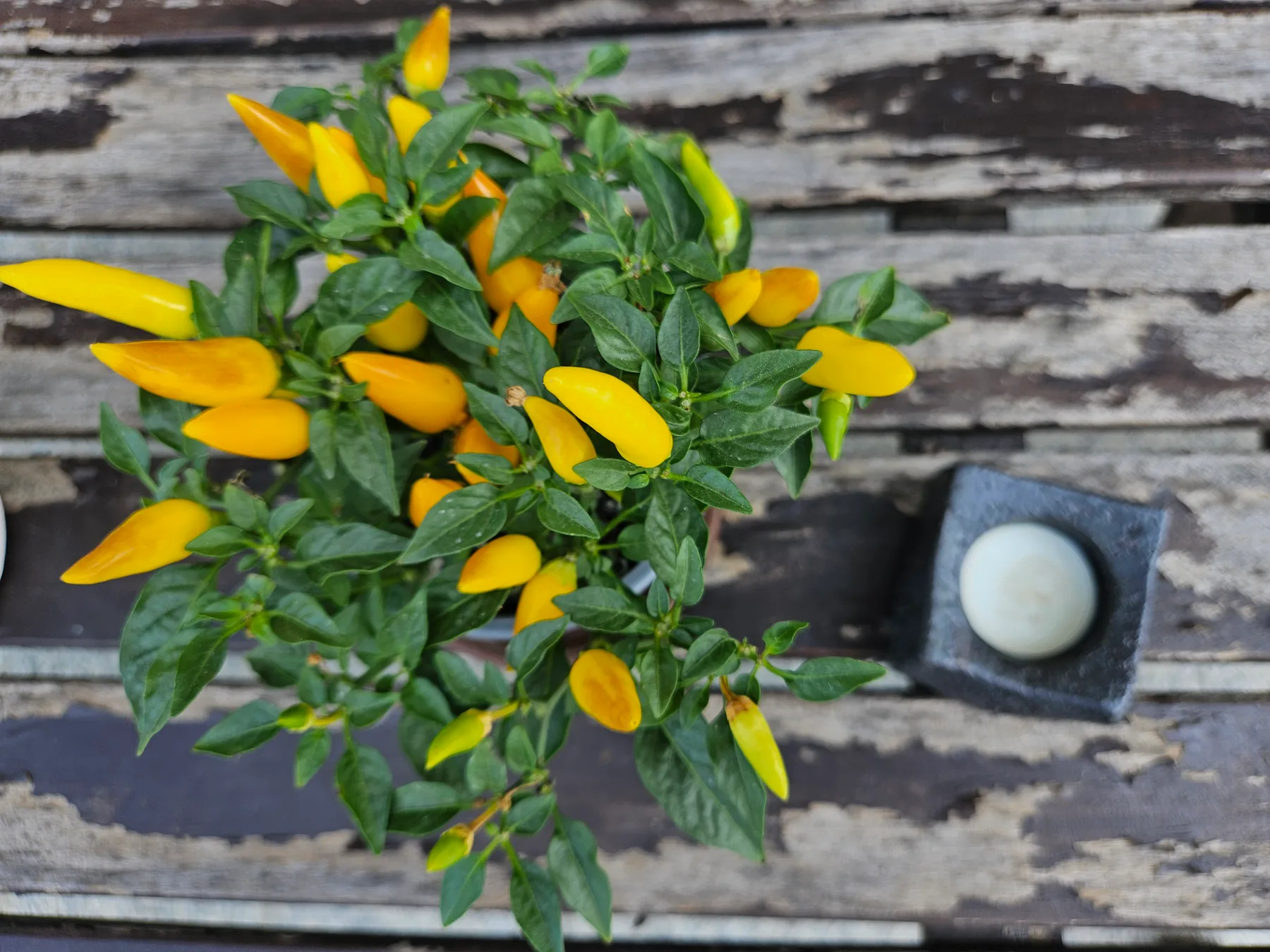
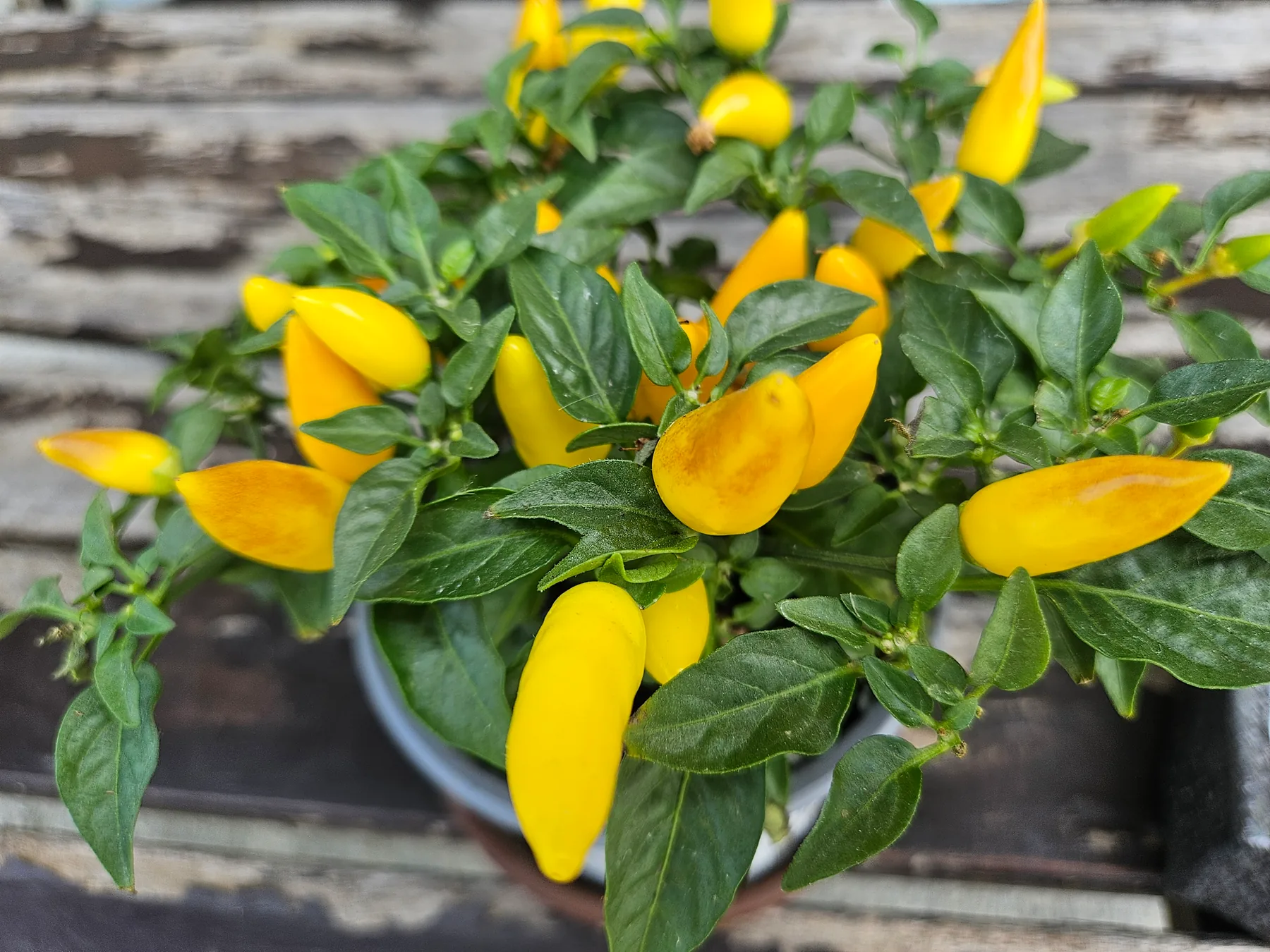
The photographs show a compact ornamental pepper carrying upright yellow and green fruit. They illustrate the plant type, not proof that an unknown plant is the same cultivar or suitable for eating. Do not use a photograph as a food-safety identification service.
Why a decorative plant may not be a food crop
Plants produced as ornamentals may have received treatments that are not intended for edible pepper crops. This does not establish what was applied to every ornamental pepper. It explains why an unknown production history should not be treated as a known food-growing history.
Pesticide approvals and label requirements differ between countries. A product available for ornamental plants where you live is not automatically permitted on peppers grown for food. The relevant crop, application instructions, and any required interval before harvest must all be considered.
Without knowing a treatment, there is no defensible universal waiting period. Washing, cooking, repotting, or waiting until the next fruit crop does not establish that an unknown ornamental product is suitable for the kitchen. For an edible crop, start with a plant or seed sold for that purpose and manage it accordingly.
Are ornamental peppers very hot?
Fruit heat varies between cultivars, and small fruit is not necessarily mild. Yellow, orange, and red colors describe appearance and ripening, not a dependable capsaicin measurement. A plant can be unsuitable for food because its history is unknown regardless of how hot its fruit would otherwise be.
Do not taste an unidentified pepper to find out what it is. Keep attractive fruit away from children and pets. When handling known hot peppers, avoid touching your eyes and wash your hands afterward; gloves can help prevent direct contact.
Light and outdoor care depend on your climate
Choose a bright position with adequate sun, introducing stronger direct light gradually after a plant has been kept in a shop or shaded greenhouse. A hot balcony with reflected afternoon heat needs a different approach from a cool windowsill. Watch for stress after moving the pot rather than assuming all sunny spots are equivalent.
In temperate climates, protect peppers from frost and cold nights. In a warm, frost-free climate, a longer outdoor season may be possible, but intense heat and heavy rain can still make a container difficult to manage. Neither a Northern Hemisphere spring date nor a winter month is a worldwide planting instruction.
Water the root ball rather than following a fixed schedule
Feel below the surface of the potting mix and compare the pot’s weight as it dries. Water when the plant needs it, before the root ball becomes severely dry, and allow excess to drain. Empty the saucer or decorative outer container. Drainage holes cannot help when the pot is left sitting in trapped runoff.
If leaves droop while the mix remains wet, check drainage and root condition before adding more water. Hot, dry wind can speed drying; a sheltered pot during a rainy season may stay wet. Indoors, air conditioning, heating, and light levels also change the interval. The houseplant watering guide explains how to combine moisture and weight checks.
Feed active growth according to the fertilizer label, accounting for nutrients already present in fresh potting mix. Extra fertilizer does not fix standing water, poor light, or a damaged root system.
Keeping the plant beyond its first display
A healthy pepper may continue growing beyond one season when conditions suit it. Where winters are cold, move it to a bright, frost-free place before damaging weather arrives, checking for pests first. Reduce watering only as the plant’s actual water use slows. A plant under strong growing lights may behave differently from one on a dim windowsill.
In tropical and subtropical regions, base care on growth, heat, rainfall, and the root zone rather than importing a cold-winter dormancy routine. The winter watering guide also distinguishes a cool, dim room from a mild-winter home.
Overwintering is a care decision, not a method of certifying future fruit as food. Seeds from ripe fruit may germinate, but seedlings may differ from the parent. For a predictable culinary crop, choose identified edible pepper seed instead of relying on an uncertain decorative plant.
Check that it is a pepper, not Jerusalem cherry
Jerusalem cherry, Solanum pseudocapsicum, is a different ornamental plant with colorful fruit that is harmful if eaten. Do not extend information about Capsicum fruit to every small, berry-bearing houseplant. Fruit shape or color alone is not a sufficient identification method.
If the plant has no dependable identification or growing history, keep it out of food. You can enjoy an identified ornamental pepper as a decorative plant while growing a separate, clearly labeled edible chili for cooking.
FAQ
Frequently asked questions
The species includes edible peppers and many ornamental forms with edible fruit. That does not establish the identity, heat, or food suitability of every decorative product sold in a pot.
No reliable heat rating follows from that name alone. Check the producer’s exact cultivar information; do not taste an unknown ornamental plant to identify it.
Washing cannot establish that a plant with an unknown treatment history is suitable for food. Respect a not-for-consumption label and ask the producer when the intended use is unclear.
Yes, if it remains healthy and has suitable light, warmth, drainage, and care. Survival into another season does not itself verify the food suitability of later fruit.