
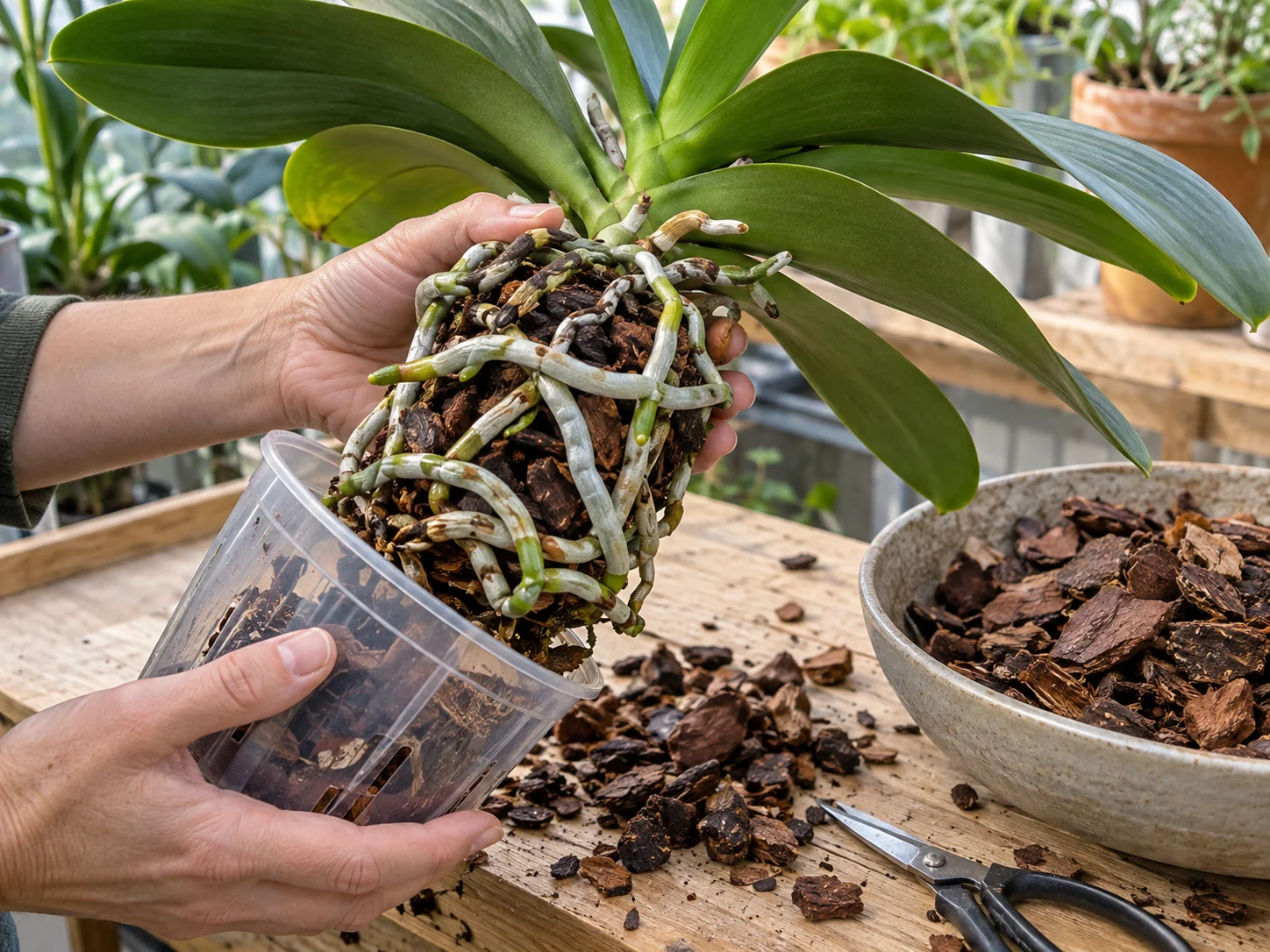
Repot for failing medium or a crowded root system, not air roots alone
Repot a Phalaenopsis when its medium is breaking down, the container no longer accommodates the root system, or deteriorating roots require attention. A few roots curling over the rim are normal for a moth orchid. Do not cut them off just to make the plant fit a decorative arrangement.
This guide concerns common Phalaenopsis hybrids grown in bark-based media. It is not a universal recipe for every orchid: terrestrial orchids, other epiphytes, and plants grown in specialist systems can need different materials and timing. Confirm the plant's identity before replacing its medium.
If roots and bark look sound, decide what the repot would improve. A new purchase is not automatically an emergency, and a larger pot is not a reward for flowering. The useful aim is a stable plant with an appropriately aerated root zone.
Read the medium and the whole root system
Look through a clear nursery pot, if there is one. Bark that has softened into fine, compact material no longer behaves like fresh, open pieces. A center that stays wet much longer than the edges deserves attention, especially if roots inside are declining. Clear walls help you observe; they do not reveal every hidden root.
Healthy roots should feel firm and retain their structure. Many exposed roots look silvery when dry and greener when wet. Color alone is not a trimming instruction: staining, light exposure, and moisture can change appearance. Soft, hollow, collapsing, or completely dead roots are a different finding.
Check the center carefully when unpotting. A densely packed nursery plug may hold moisture differently from the surrounding bark. Loosen material gently without tearing roots just to remove every last fiber. Keep a note of what the center contained so that you can adjust watering after repotting.
Choose the timing and prepare everything first
For a routine repot, new root growth is a useful signal, and waiting until a flower display has finished can reduce disturbance to the blooms. Do not use a Northern Hemisphere month as a worldwide instruction: indoor conditions and the plant's own growth matter more than the date.
If the root zone is deteriorating badly, waiting for a convenient flowering break can mean further losses. Correct a real problem when you find it, while accepting that flowers or buds may not remain unaffected. That decision is different from changing pots for appearance alone.
Have a clean, well-drained orchid container, suitable fresh medium, and clean sharp scissors ready. A transparent pot is useful for later inspection. Choose its size after seeing the roots; the same size may be enough. Follow the medium's preparation instructions, since materials differ in how readily they wet.
Unpot gently and preserve sound roots
Support the orchid at its base and ease the root mass free. Squeeze a flexible pot gently or release caught roots rather than pulling against them. Work slowly around the fragile growing tips. If roots are firmly attached to a container, prioritize avoiding injury over keeping a disposable pot intact.
Remove loose old medium with your fingers. Inspect roots as you go, trimming clearly dead or rotted portions with clean tools. Do not shorten all healthy roots to an arbitrary length, and do not remove a firm air root because its shape is inconvenient.
Pause before potting if you discover extensive damage at the crown or very little living root tissue. That plant needs a recovery assessment, not simply the ordinary procedure described here. A new pot does not resolve every disease or reverse severe tissue loss.
Set the crown above the bark and keep the plant stable
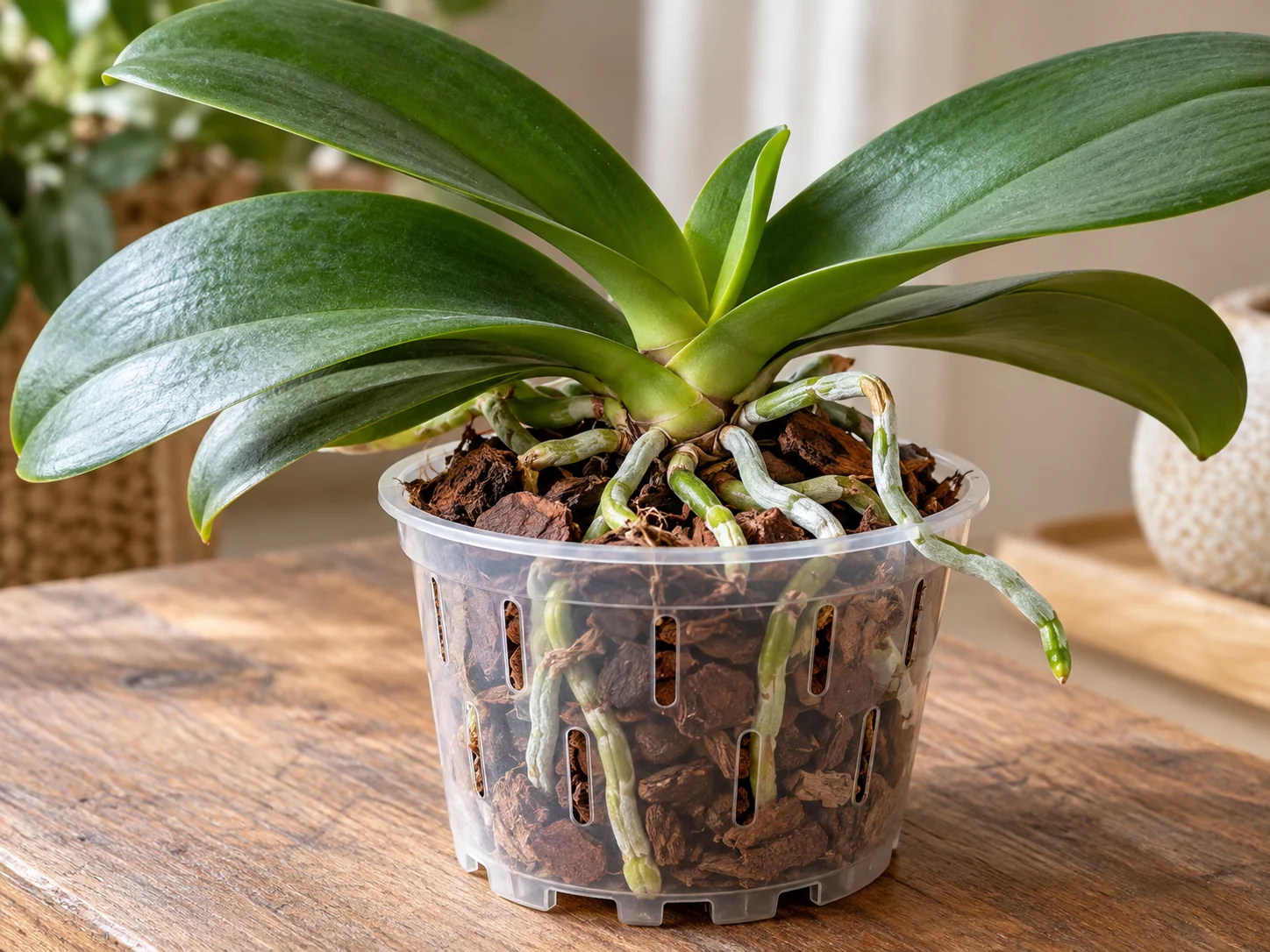
Arrange the sound pot-grown roots comfortably in the container and work fresh bark around them without crushing them. Keep the base and crown at the appropriate level, above the medium rather than buried beneath it. Let established air roots remain outside instead of forcing them down into wet bark.
The orchid should sit securely enough that ordinary handling does not rock it around. If needed, use a suitable support without piercing roots. Stability protects developing root tips, but it is not a reason to compress bark until the root zone loses its open structure.
Choose an orchid medium suited to your conditions, not ordinary garden soil. Bark size and moisture retention matter: a very open mix in a warm, dry room behaves differently from a finer, more absorbent mix in a humid growing area. There is no single bark grade that removes the need to check moisture.
Reset watering after the repot
For a routine repot with sound roots, moisten the prepared medium appropriately and let excess water escape. Keep water out of the crown and do not leave the nursery pot standing in collected water. If you have removed extensive damaged tissue, seek aftercare suited to that condition rather than assuming the routine method is enough.
The new medium may dry differently from the old one. Compare pot weight, visible moisture, and the condition of the roots over several checks. A weekly reminder can prompt an inspection, but it should not trigger watering automatically.
Keep the orchid in suitable filtered light and stable conditions while it settles. Record the repot date, medium, and any root loss. New growth is a better long-term measure than expecting immediate flowers, and repeated repotting to check progress can damage the very roots you want to preserve.
FAQ
Frequently asked questions
Do not remove firm, healthy air roots just because they extend outside the pot. Remove genuinely dead or deteriorating tissue when necessary.
No. Choose a container for the sound roots that remain. Replacing deteriorated medium may be possible in the same-sized clean pot.
Ordinary soil-like mixes are generally unsuitable for bark-grown Phalaenopsis. Use an appropriately airy orchid medium and adjust watering to its behavior.
It may be necessary if the root zone is failing, but blooms can be affected. For a routine change, a flowering break and active new roots are useful timing cues.