Start with the pot they come from
To reduce fungus gnats, identify the pots producing them, correct unnecessary moisture, and monitor the adults while the population declines. A yellow sticky card can catch flies, but it does not remove larvae living in the mix. Do not treat a healthy collection with several products just because you saw one small insect.
Watch what happens when you approach or gently move a suspect pot. Fungus gnats often linger near the medium, make short flights, and gather at windows. Flies concentrated around fruit, food waste, or a drain may have a different source. When the source is uncertain, investigate it rather than watering a plant with a remedy for the wrong insect.
What do fungus gnats look like?
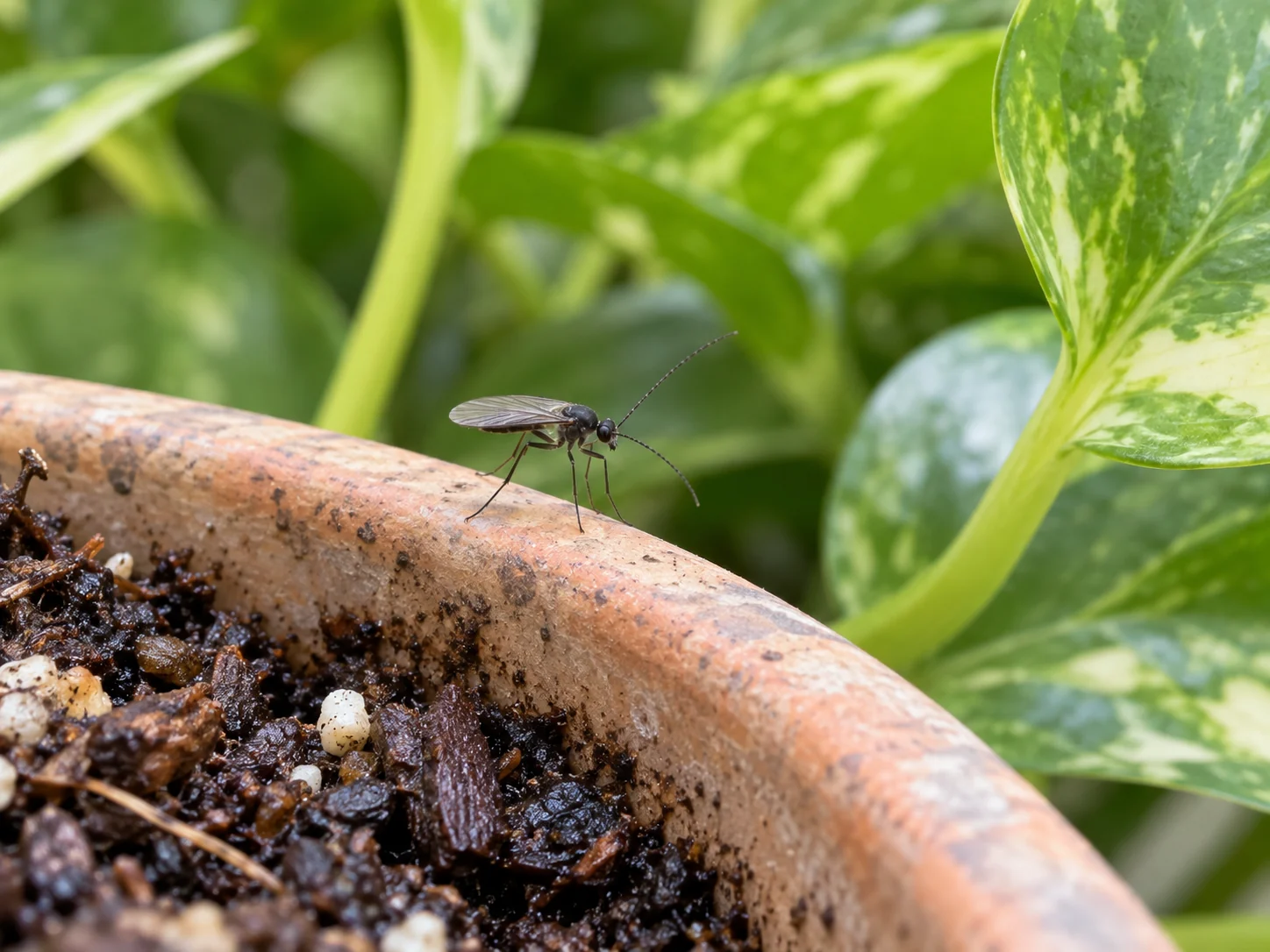
The familiar houseplant species are tiny, dark, delicate flies with slender legs and antennae. Adults are generally around 2–4 mm long, roughly 1/16–1/8 inch depending on the species. Their mosquito-like outline is more useful for an initial comparison than color alone. Clear close-up observations are better than trying to identify a moving speck across the room.
Larvae live in the growing medium and are pale or translucent, wormlike, and dark-headed. They feed on fungi and decaying material, and can also feed on roots. The adults do not bite people. Most established plants tolerate modest populations, while seedlings, cuttings, and stressed plants are more vulnerable to heavy infestations.
If a plant is wilting, do not assume the gnats caused all the damage. Check drainage and the roots too. Conditions that favor these flies can coincide with a waterlogged pot or another problem that requires its own correction.
Reduce the breeding habitat without harming the plant
Review each affected pot separately. Remove fallen leaves and other decaying debris from the surface, empty unnecessary standing water, and check that the mix is not being kept wet by a blocked hole or a hidden cachepot. A water reservoir designed for a particular planter is a different arrangement from an ordinary nursery pot left in a full saucer.
Where the species tolerates it, allow the upper mix to dry between appropriate waterings. That changes a favorable breeding environment, but deliberately drying the entire root ball of a fern, seedling, or moisture-loving plant is not sensible pest control. Keep the plant's needs as the boundary of the method.
Use the next few inspections to compare pots: which stays wet longest, which produces flies when disturbed, and which has little activity? Put your attention on the active source. This is more informative than changing all your plants to the same watering schedule.
A cooler room, reduced daylight, or slower growth may leave an old watering routine too generous. Those conditions can occur at different times in different climates, and an air-conditioned room does not follow the outdoor season. Adjust to the pot's behavior rather than to a month name.
Use sticky cards to measure progress
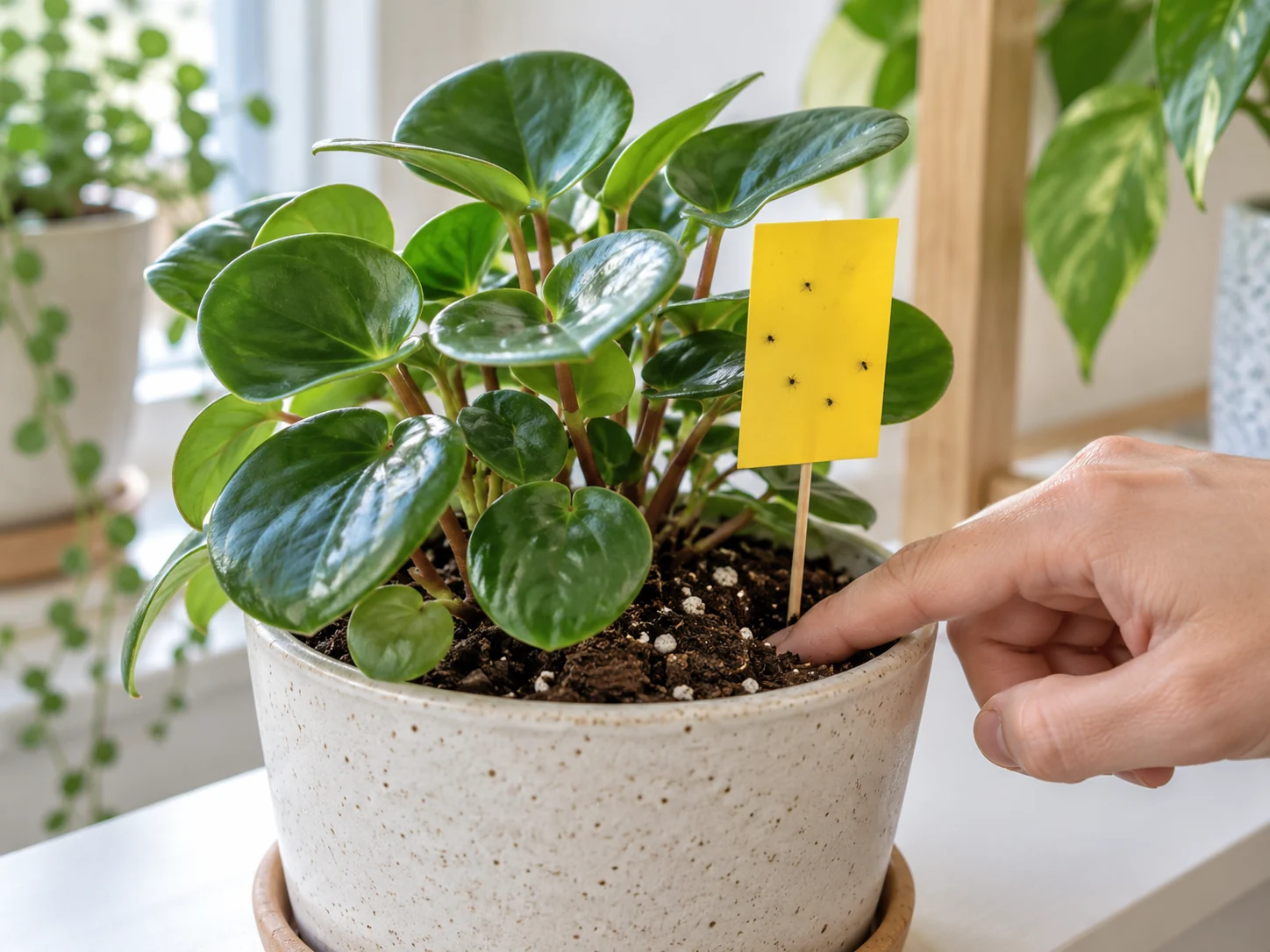
Position a small yellow sticky card close to the affected indoor pot, following its instructions. Keep it away from children and pets. Write down the date separately and compare catches over similar periods. A fresh card beside one pot is easier to interpret than an old card moved around the room.
Fewer newly trapped adults over successive checks is a more useful sign than a promise that every fly will vanish overnight. Existing immature stages can continue producing adults after you change care. Development depends on temperature and conditions, so there is no reliable worldwide three-day deadline.
Keep monitoring while checking for overlooked sources, including another damp pot or spilled, wet growing material. Avoid placing sticky cards outdoors where they can trap insects you are not trying to control.
When is a larval treatment worth considering?
If the source is confirmed and numbers remain troublesome despite suitable care, an appropriate biological treatment may help. Products based on Bacillus thuringiensis subsp. israelensis target susceptible fly larvae; they are different from Bt products intended for caterpillars. Steinernema feltiae nematodes are another option in markets where suitable products are available.
Check that the actual product is permitted for your location, plant, and growing setting. Follow its storage, preparation, moisture, and application instructions. Nematodes are living organisms; a dry or otherwise unsuitable application can defeat the treatment. Do not invent a dose or reuse instructions from an unrelated product.
Apply one coherent plan and keep a record of what you used. If you introduce a treatment that requires moist mix, reconcile that requirement with the plant's care instead of simultaneously trying to dry the pot completely. Spraying adults in the air usually does little to address the breeding source.
Prevent a return without replacing every pot
Inspect new plants and growing media before adding them to the collection. Store spare mix closed and dry as directed, clear up wet spills, and check plants brought indoors from outside. Repotting every plant is disruptive and does not fix a routine that keeps the new mix unnecessarily wet.
Before buying another remedy, ask three questions: Have I identified the source? Does this plant actually need water? Are new catches decreasing? Those observations help you decide whether to continue, investigate another source, or seek an identification from a local plant adviser.
FAQ
Frequently asked questions
The common fungus gnats associated with houseplants do not bite people. If insects are biting, reconsider the identification.
They catch and monitor adults but do not eliminate larvae in the medium. Combine monitoring with attention to the breeding source and suitable plant care.
No. Some plants need more consistent moisture. Reduce unnecessary wetness within the species' tolerances rather than sacrificing the plant to a pest-control rule.
No. It does not automatically make the growing medium unsuitable for larvae. Check how much moisture remains, drainage, and the actual source of the flies.