What does a self-watering pot actually do?
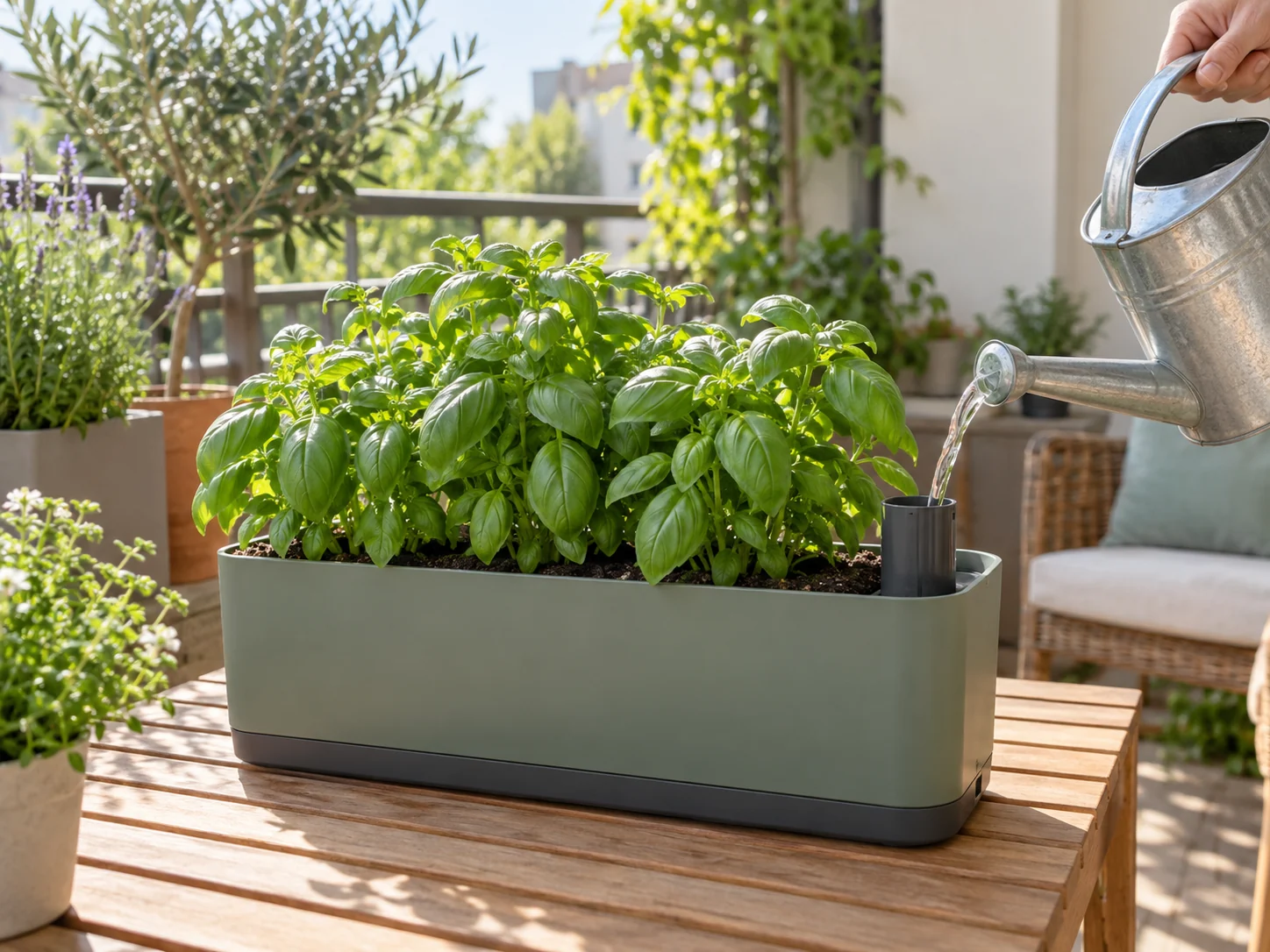
A self-watering pot stores water beneath or beside the growing medium and moves it toward the roots through a wick or a wicking section of mix. You refill the reservoir instead of supplying every watering from above. The system can reduce watering work, but it does not measure whether a particular plant is getting the conditions it needs.
This guide is about containers with potting mix and a reservoir, not hydroponic equipment. Designs differ: some have a planting insert and fill tube, others use a wick linking an inner pot to stored water. Check the instructions for your model before filling, modifying, or planting it.
Choose the plant, medium, and intended position before buying a system. A planter that works well for an actively growing herb on a bright balcony may keep a slow-growing plant in a dim room wetter than intended. The reservoir is a tool, not a universal upgrade.
Find the fill point, root zone, and overflow
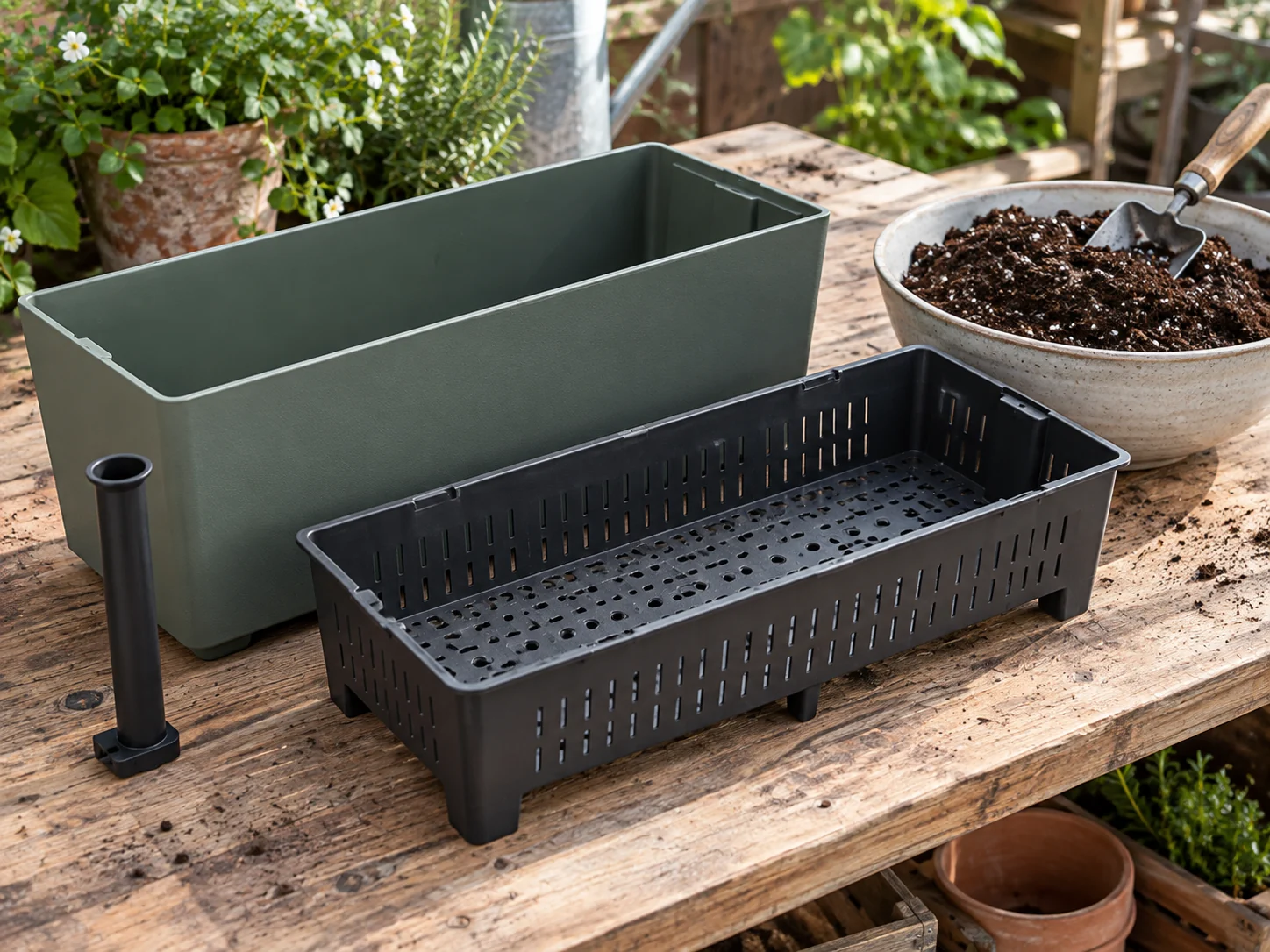
Before adding mix, identify where stored water sits and how it connects to the planting area. In common designs, a wick or small wicking chamber crosses the gap; the whole root zone should not simply be immersed in a flooded box.
For outdoor use, check where excess rainfall leaves the planter. An overflow sets the reservoir's upper water level. A blocked outlet or a plug left in the wrong configuration can allow that level to rise into the medium. Read the outdoor setup instructions rather than drilling an arbitrary hole that may change the system.
Indoor planters may prioritize containing water and use a maximum fill mark instead of an open outlet. That does not make them safe to leave in heavy rain. Keep drainage water away from indoor surfaces, and choose an outdoor-suitable design if the pot will be exposed.
Which plants are better candidates?
Plants that benefit from reasonably even moisture are often easier candidates than those needing a pronounced drying period. Basil and lettuce provide useful comparisons with rosemary or thyme, which generally prefer a drier cycle. Even among suitable crops, adequate root space, light, temperature, and feeding still matter.
Cacti and many drought-adapted succulents are poor default choices for a continuously moist potting system. A label saying that the planter works with all plants does not replace a species-specific care check. Likewise, a plant's reduced water use during slower growth can change whether continuous access to the reservoir is helpful.
Start with one healthy plant whose care you already understand. That lets you compare the new setup with ordinary growing experience without moving a whole collection into a system you have not observed.
Set up the medium and establish the plant
Use a container medium compatible with both the plant and the wicking design. Loose garden soil is not an interchangeable substitute. The mix needs to move water through the intended connection while retaining enough air around roots; an extremely coarse medium may wick poorly, while an unsuitable dense one can remain too wet.
Assemble the insert, wick, and fill tube before planting. Prepare and moisten the medium as its instructions require, and leave the plant at the correct depth. Do not add a decorative gravel layer between the wick and mix or otherwise interrupt the designed contact.
A newly planted small root system may not yet access moisture supplied below. Some models therefore require top watering during establishment. Follow the manufacturer's method and check the actual root-zone moisture rather than assuming a full tank proves that the plant is watered.
Refill according to observations, not a fixed number of days
During the first few refill cycles, record the reservoir level and check the growing medium as well. The two observations answer different questions: how much water remains available, and what conditions the roots are experiencing. Follow any specified refill or drying cycle for your model and plant instead of keeping every tank permanently full.
A dry root zone above a full reservoir suggests checking the wick, contact, medium, and establishment of the plant. An unusually wet root zone calls for checking the water level, overflow, and plant suitability before adding more. Do not diagnose either situation from a floating indicator alone.
Consumption changes with plant size, warmth, light, wind, and rain. A sheltered tropical balcony and a heated apartment in a temperate winter are different growing environments. No worldwide refill interval or universal vacation duration can account for both.
Follow feeding instructions appropriate to the crop and system. A reservoir does not remove nutrient requirements, and improvising a stronger fertilizer concentration is not a shortcut to faster growth.
Check it at home before relying on it while away
Run the planter through several ordinary checks before a trip. Use the intended location and a realistically similar plant size. Record how quickly the level falls, whether the medium stays suitable, and whether the overflow works. A system tested during mild weather has not been tested for a later heat wave.
Do not repot a struggling plant into an unfamiliar reservoir immediately before leaving. Arrange someone to check it if the absence exceeds what you have actually observed the system managing. Leave instructions naming the fill point and maximum level, rather than simply asking them to water the plant.
Keep the fill opening covered as designed, clear debris from accessible outlets, and maintain the container according to its instructions. If freezing weather is possible, follow its storage advice and the plant's cold tolerance. Emptying a reservoir does not make a tender plant winter-hardy.
FAQ
Frequently asked questions
Yes. An unsuitable plant or medium, excessive water level, or faulty outdoor overflow can leave the root zone too wet. Check the medium as well as the tank.
Not automatically. Follow the planter's instructions and the plant's moisture needs, including any recommended refill cycle.
Check the wick, its contact with the medium, and whether a new plant needs establishment watering. Stored water is only useful if the designed connection moves it to the root zone.
There is no reliable universal duration. Observe the actual setup over several cycles and allow for changing weather and plant growth before depending on it.