A closer look at cucumbers that set fruit without pollination
Scientists at Nanjing Agricultural University have identified CsBZS1 as a candidate gene associated with parthenocarpy in cucumbers. Parthenocarpy is the development of fruit without fertilization. Their research appeared in *Plant Hormones* on August 18, 2026, and was highlighted by the horticultural press on October 21.
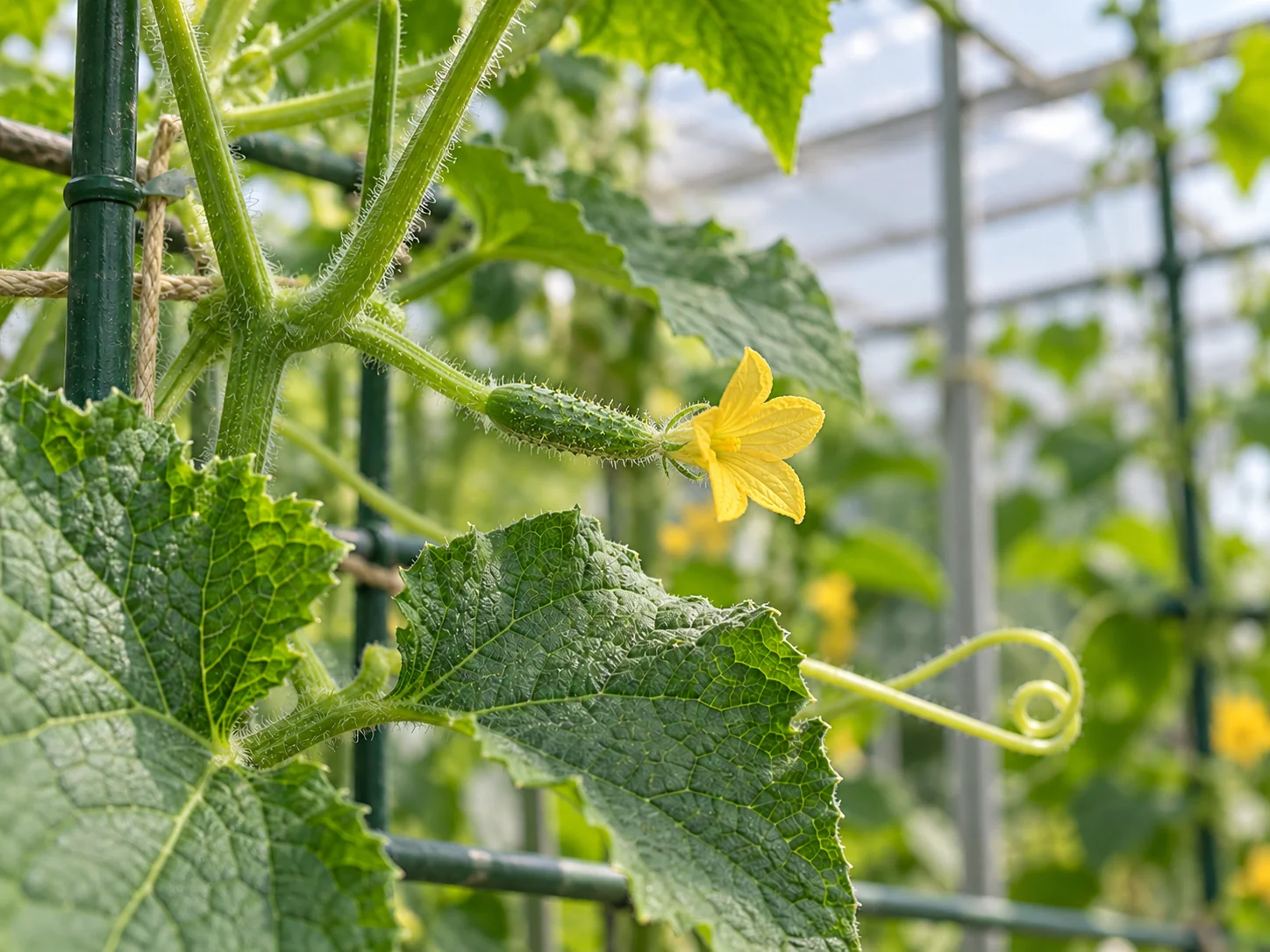
Some cucumber varieties already produce fruit without relying on pollinating insects. The trait can be useful in protected growing environments and is often associated with seedless fruit. Understanding its genetic basis could help breeders investigate how consistently plants set fruit across different environments.
What the research found
The team investigated a previously mapped region associated with parthenocarpic fruit set, known as Parth7.1, and identified CsBZS1 as a candidate gene. Their experiments linked higher CsBZS1 expression to responses involving brassinosteroids, plant hormones that influence growth and development.
Genetic, hormone-treatment and promoter analyses collectively supported a role for the gene, but important questions remain about the precise regulatory mechanism. The work strengthens a scientific hypothesis rather than proving that changing this one gene will reliably produce a desired crop in all varieties.
Why greenhouse growers may care
Pollination can vary with growing conditions and crop management. A cucumber capable of reliable fruit set without fertilization may reduce dependence on successful pollination in some protected-crop systems. However, actual productivity also depends on cultivar, temperature, nutrition, light and plant health.
For breeders, identifying a candidate gene and a hormone-response pathway provides targets for future testing. It does not mean a commercial seed line based on CsBZS1 is available today, nor does it establish a yield benefit for backyard gardeners.
What gardeners should take from the news
If you are choosing cucumber seed, check the variety description for parthenocarpy rather than looking for the experimental gene name. A greenhouse label alone does not establish pollination requirements. The cucumber profile explains why cultivar and growing system matter; the outdoor cucumber profile covers a different cultivation context. Follow the seed supplier's specific pollination guidance instead of assuming the two groups are interchangeable.
The next meaningful research step is to test the proposed genetic mechanism more directly and determine whether it helps maintain fruit set across cultivars and growing conditions. Until then, this is a genetics discovery with potential breeding applications, not a new cultivation treatment.
FAQ
Frequently asked questions
Some cucumber varieties can form fruit without fertilization. The trait varies by variety and growing conditions; follow the cultivar's growing instructions.
The research does not announce a new commercial variety. It identifies a candidate gene for further study and breeding.