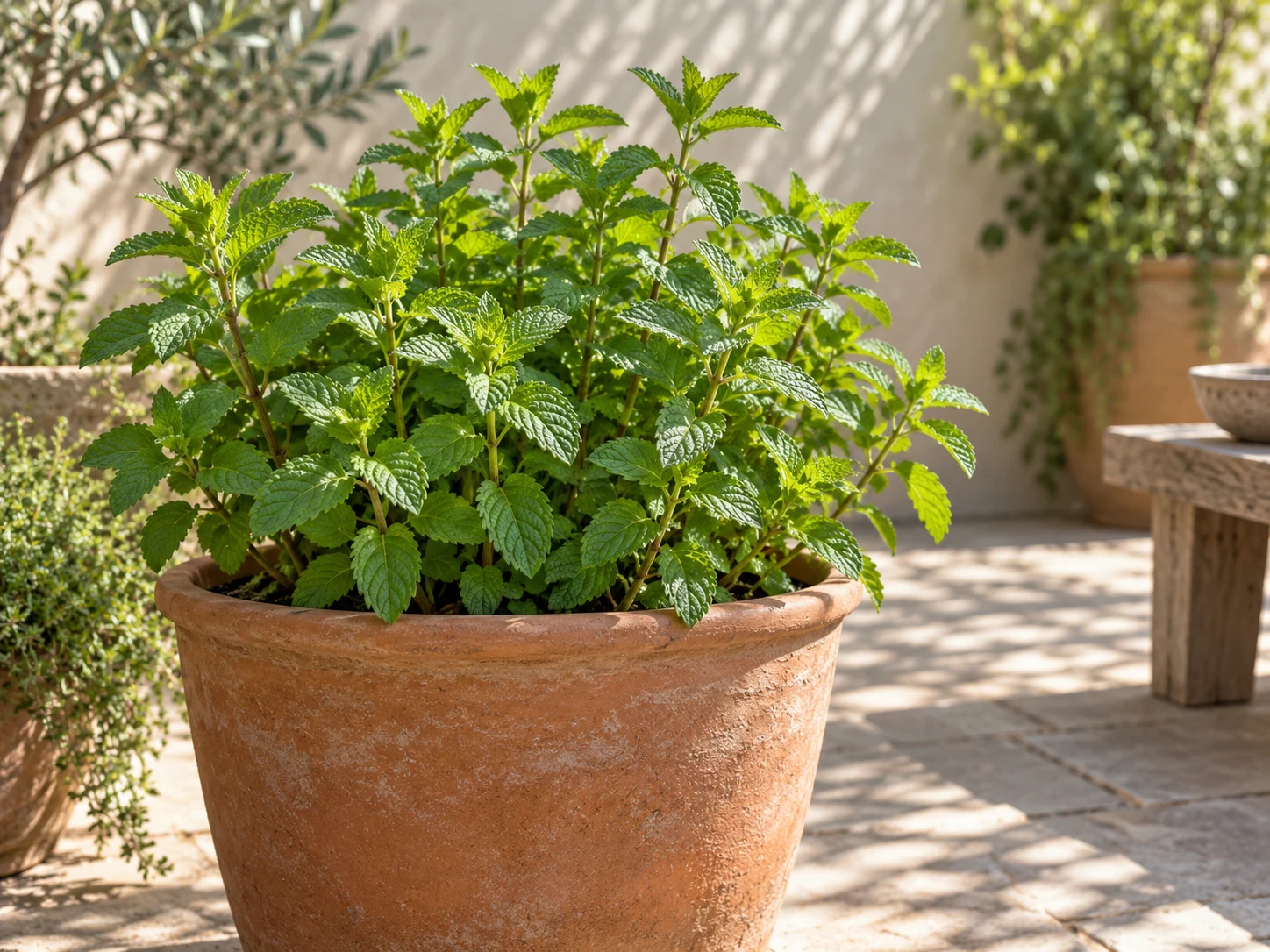
A pot gives mint a boundary, not an automatic care plan
Mint is useful in a container because you can keep it close to the kitchen and watch its spread. That convenience does not make every container a good growing environment. A pot on a hot balcony, a patio exposed to seasonal rain, and a cool indoor windowsill can hold the same plant but behave very differently. Your first job is to understand the root zone rather than choose a universal watering day.
Start with a labeled plant, a container with drainage holes, and a place where you can check it easily. Aim for a root ball that stays reasonably evenly moist without sitting in trapped water. Then adjust your checks to the weather and the plant's growth. This approach works across climates because it begins with conditions you can observe, instead of assuming that a month name tells you what to do.
Choose the mint you actually want to use
Spearmint, Mentha spicata, and peppermint, Mentha × piperita, are common culinary choices, but their flavor is different. Spearmint is often chosen for a milder profile in savory dishes; peppermint has a stronger cooling character. Buying a named plant lets you choose for use in the kitchen rather than relying on the word "mint" alone.
Keep the label. A nursery plant or a division from a known plant is a more dependable way to retain a particular mint's characteristics than an unidentified packet of seed. Names containing "mint" also occur outside the genus Mentha. Do not use the advice here as a guide to identifying or eating an unknown plant. This article is about growing clearly identified culinary mint.
Match the container to the root ball
Choose a pot with enough room for the current root ball and further growth. A very small nursery pot may dry quickly; an oversized container around a small plant can hold a large volume of wet mix that roots have not yet reached. There is no single diameter that solves both problems. Consider the plant's size, the material of the container, and how often you can realistically check it.
Use potting mix intended for container growing. Mint generally needs more consistent moisture than dry-growing Mediterranean herbs, but it still needs air around the roots. Dense garden soil may compact in a pot and become difficult to wet evenly. Read the mix label for any added fertilizer before planning additional feeding.
Check the entire drainage arrangement. Holes in an inner pot do not help if its decorative outer container is full of water. A layer of stones cannot provide an exit from a sealed container. After watering, let the excess drain away and empty whatever catches it. If the pot stands on paving, make sure its base is not blocking the outlets.
Light: use the actual exposure, not the direction alone
Mint can grow in sun or partial shade, provided its water needs are met. In hot locations, protection from the most intense afternoon sun can make container care more manageable. In a cooler, low-light setting, too much shade may instead limit growth. Observe both the leaves and the speed at which the mix dries before changing the position.
A west-facing balcony in a hot, dry city is not equivalent to a west-facing patio in a cool maritime climate. Reflected heat, wind, roof cover, and neighboring buildings can matter as much as compass direction. Introduce a plant that has been kept under sheltered retail conditions to stronger outdoor light gradually. Give it time to respond before making another large change.
Build a watering decision around three checks
First, feel the potting mix below its surface, in a gap beside the stems. Next, lift the container if its size allows: its weight after draining provides a useful comparison with its weight as it dries. Finally, inspect the saucer or outer pot. Together, these checks tell you more than pale surface particles or one drooping shoot.
When the root ball is beginning to dry, apply water slowly across the mix so that it reaches the roots rather than one narrow channel. Allow runoff to escape. If water pours straight through but the root ball remains dry and unusually light, it may be bypassing the mix. Rewet it gradually and reassess; repeated quick splashes can leave much of the root zone unchanged.
A wilted mint in heavy, wet mix needs a different response from a wilted mint in a dry, light pot. Check drainage and the condition of the roots before adding more water. Keep notes on how the container behaves after a move, a period of rain, or a change in season. The aim is a repeatable decision, not a fixed quantity for every watering.
Temperate climates: separate winter survival from winter harvest
Where winters are cold and growth slows, common perennial culinary mints may lose their top growth and regrow when conditions improve. A bare pot is not automatically a dead plant. Container roots, however, are more exposed than roots insulated by surrounding garden soil. Species identity, local cold, container size, and shelter all affect the outcome.
Before sustained freezing weather, choose a protected place, protect the container where appropriate, and keep drainage open. During unfrozen periods, check whether the mix has become too dry. Do not keep a resting plant permanently wet, and do not assume that wrapping its leaves protects its root ball. Moving it to a heated room is also not a guarantee of useful leafy growth if light is inadequate.
The working threshold is the behavior of water and the root zone around freezing, 0°C (32°F), not a promise that every mint tolerates the same minimum temperature. A winter-hardiness rating does not describe a hot summer, the rainfall pattern, or an exposed container. Use local guidance for your identified plant when planning winter protection.
Hot, dry climates: reduce repeated stress before increasing inputs
In a hot, dry period, start by checking exposure and the size of the water reserve in the pot. A container that repeatedly dries throughout the root ball may need a more manageable position or repotting, rather than ever-larger amounts of fertilizer. Shade during the harshest part of the day can reduce the practical burden of care, but deep shade can create a different limitation.
Do not make afternoon wilting alone your watering instruction. Compare it with the condition of the mix and with the plant's appearance after temperatures ease. If the roots are already wet, further watering is not an informed response. Where water use is restricted, adapt the setup to local rules and choose a container system you can maintain responsibly. This guide does not assume unrestricted irrigation.
Humid and rainy climates: control the water that enters the pot
A pot that works well in a dry season may stay wet during prolonged rain. Before a wetter period, clear drainage holes and inspect the stand or outer container. Where practical, an airy position with some protection from repeated heavy rainfall makes it easier to judge when watering is actually needed. A covered spot still needs adequate light and air movement.
Check dense foliage for damaged leaves and changes on both leaf surfaces. Avoid turning a general concern about humidity into a diagnosis of fungal disease. Compare the pattern, the pace of change, and the recent conditions. In tropical and subtropical locations, a rainy or drier period may be a more useful planning cue than the Northern Hemisphere idea of spring and autumn.
Harvest shoot tips while keeping a productive plant
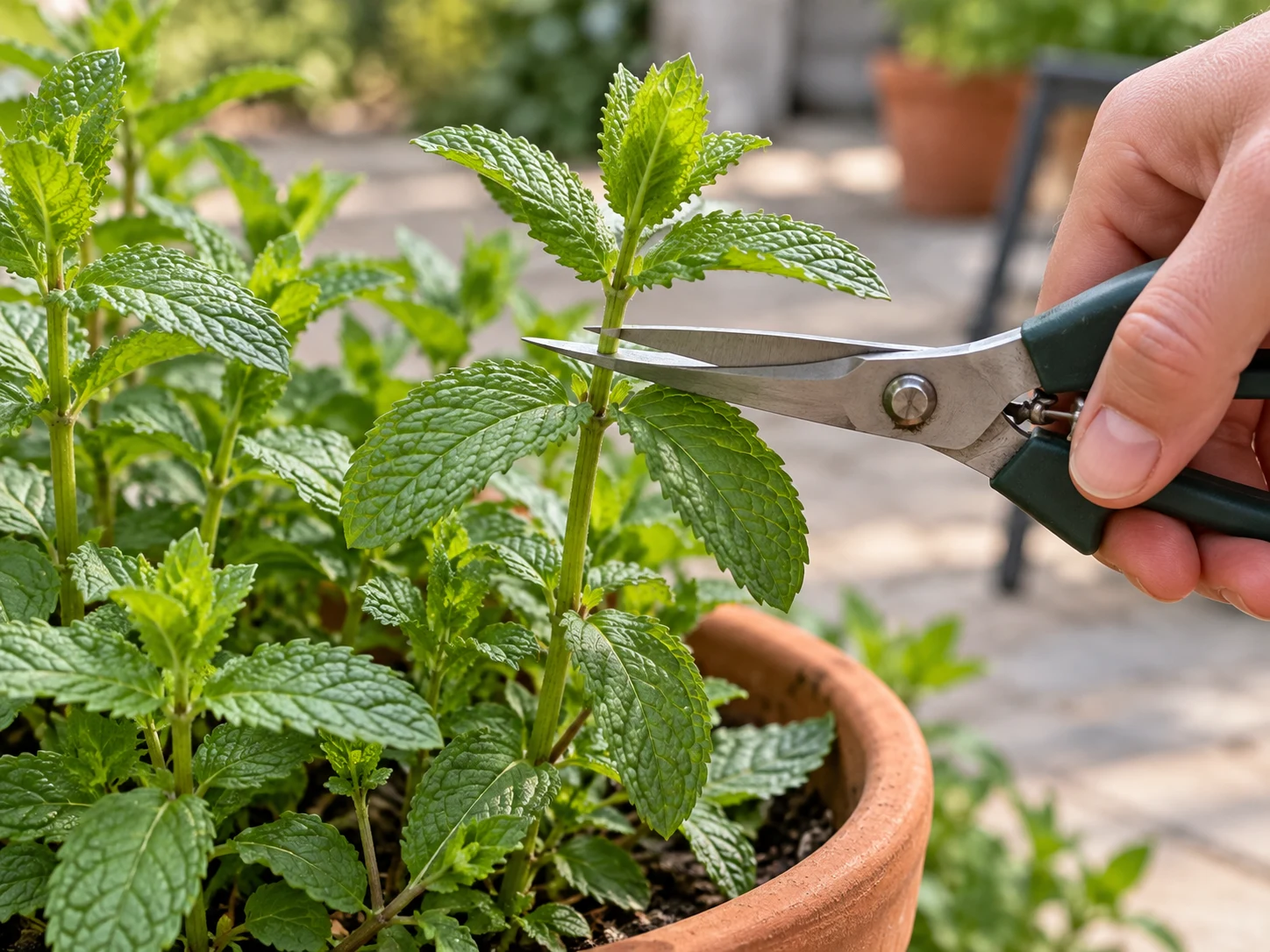
Use clean scissors to take healthy shoot tips just above a pair of leaves. Leave green growth behind so the plant can continue growing. This is often easier to manage than stripping leaves from long stems and leaving a collection of bare stalks. Harvest across the plant rather than repeatedly cutting the same weak section.
Wait for a newly potted, stressed, or recovering mint to establish active growth before taking a large harvest. If your main aim is young foliage, remove some developing flower shoots. If you also want flowers for visiting insects, leave a portion to bloom. Neither choice requires claiming that flowering makes all the remaining foliage unusable.
Feed active growth, not a problem you have not identified
Check how much fertilizer the original potting mix already contains. If an established plant is growing actively and being harvested repeatedly, an appropriate container fertilizer may be useful. Follow the product directions and assess the plant's response. Different concentrations and formulations make a universal spoonful or weekly dose unreliable.
Yellowing is not proof that feeding is overdue. Check moisture, drainage, light, and root crowding first. Feeding cannot correct a root ball that is waterlogged or repeatedly drying out. It also cannot replace adequate light in a room where the plant is barely growing. When growth slows, reconsider the feeding plan instead of automatically extending a vigorous-season routine.
Renew a crowded root ball and keep the runners contained
Inspect a mint that has become congested, difficult to water evenly, or sparse in the center. Its roots and spreading underground stems may have filled much of the available container. Repotting into a suitable larger pot is one option; dividing a healthy clump and keeping one vigorous section in refreshed mix is another.
Choose a period when the plant can recover in moderate conditions. In a cool temperate garden that often coincides with renewed growth after winter. Elsewhere, use the local growing pattern rather than importing a March or September rule. Each retained division needs healthy roots and growing points or shoots. Do not distribute suspiciously damaged material as new plants.
Keep checking the boundary. Roots and runners can escape through drainage holes, and stems resting on nearby soil can take root. A container standing directly on a bed requires more surveillance than one on a hard surface, but neither should be ignored indefinitely. Controlling the spread is an ongoing part of growing mint.
Indoor mint: convenient, but not exempt from light limits
Growing close to a kitchen window makes checks and harvests easy. It does not guarantee that the window supplies enough light for sustained growth. Long, weak shoots, a plant leaning toward the glass, or repeated poor regrowth after harvesting are reasons to review the setup. Avoid treating a heated indoor room as an unlimited growing season.
If supplementary lighting is used, follow the equipment guidance and observe the plant rather than guessing a universal lamp distance. Reassess watering after any change in light or temperature. An indoor mint should still drain freely and should not share a permanently water-filled decorative container with other herbs.
Investigate leaf damage before choosing a treatment
Look at young and old leaves, the undersides, the stems, and the extent of any visible pests. Remove heavily damaged material when appropriate and improve an obviously overcrowded setup. Record what you see before treating it. One brown patch is not enough to identify a cause, and changing several conditions at once makes the result harder to interpret.
For a plant harvested for food, do not use an unverified homemade spray or assume a product permitted elsewhere is allowed locally. Any pesticide decision depends on the identified problem, the specific crop, the current local approval, the label, and the interval before harvest. This article deliberately avoids presenting one country's product advice as a worldwide recommendation.
Keep a short record you can reuse
Record the mint's name, the potting date, the mix, and its position. Add brief notes when heat, rain, or reduced light changes the rate of drying. Before traveling, try the intended watering arrangement while you can still observe it; standing the container in deep water is not a universal holiday solution.
Review the root ball when growth becomes crowded and revise the seasonal plan when your conditions change. For mint, a useful care record is a sequence of observations and decisions: check the roots, manage moisture, harvest healthy growth, and renew the clump when needed. That remains relevant whether your main challenge is winter cold, summer heat, or a long wet season.
FAQ
Frequently asked questions
Daily checks may be useful in hot weather, but daily watering is not a worldwide rule. Check the root ball and drainage. A cool, wet container may need no additional water.
Container culture can be attempted with a locally suitable culinary mint. Assess heat, rain, drainage, and growing conditions; do not apply a temperate winter calendar to a tropical location.
A healthy, established plant can provide small harvests. Productivity depends on the plant, light, root space, and care. More plants crowded into the same container do not necessarily improve it.
Separate containers are usually easier to manage. Mint commonly needs more even moisture, and its spreading stems can crowd other herbs.
It describes cold tolerance within the scope of a rating or recommendation. It does not guarantee survival in an exposed container or suitability for every climate.
It may be bypassing a dried root ball or draining through a very open mix. Check whether the roots and mix have actually become moist. Rewet a dry ball gradually and inspect root crowding if the problem persists.