The photograph was familiar. The location was not.
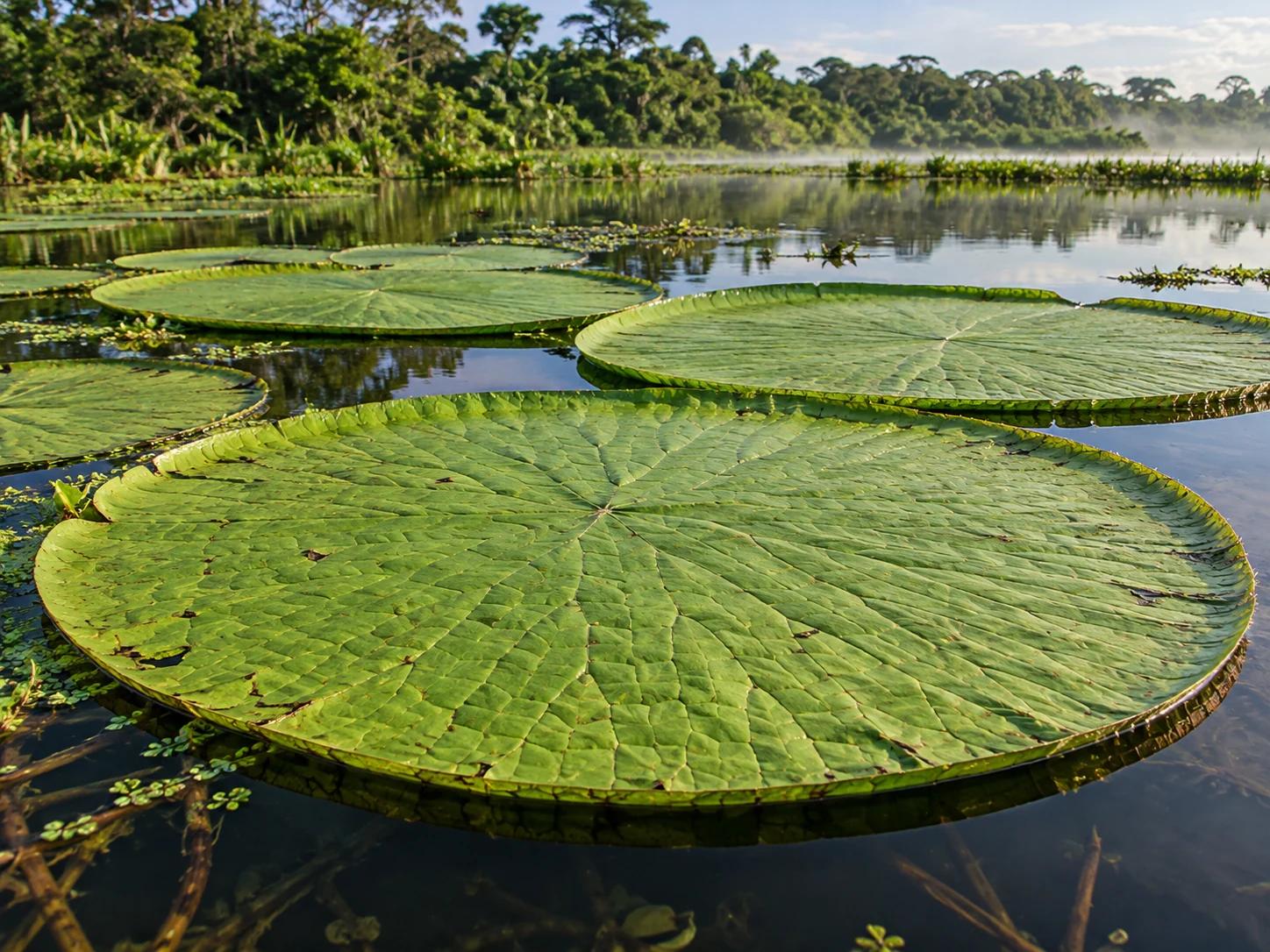
An enormous floating leaf can be hard to miss. Recognizing that it belongs to an undescribed species is another matter. When Kew horticulturist Carlos Magdalena saw Jeremiah Harris’s Instagram photographs from Colombia’s Inírida region in 2021, the place caught his attention: it did not fit the range he expected for the familiar giant waterlily Victoria amazonica.
That mismatch started an investigation combining satellite images, fieldwork and the knowledge of Indigenous communities. The resulting paper describing Victoria colombiana appeared in Phytotaxa on October 7, 2026; Kew announced the discovery on October 9.
At 1 a.m., the search took an unexpected turn
The expedition had a practical problem: leaves alone were not enough. The team needed flowering material for the botanical specimens used to describe the species. Plants had been located, but a flower was still missing as the return flight approached.
Late that evening, Magdalena explained the situation to boatman Gustavo Melo, a member of the Tucano community. Melo knew another place to look. At 1 a.m., they set out again through the flooded forest, away from the airport. Before sunrise, they reached a lake with flowering plants and collected the material they needed.
The story is not one of a plant nobody had ever seen. Local people knew the waterlilies. What changed was their scientific recognition, made possible by bringing that knowledge together with horticulture and taxonomy.
A giant leaf with a surprisingly low rim
Kew’s species profile describes bright green leaves that can reach about 2.5 meters (8.2 feet) across. They are generally flat, sometimes with a slightly upturned edge, and have short, soft prickles. Those details offer more to look for than size alone: a large round leaf does not automatically identify the species.
The flowers open over two nights, closing during the day between them. Kew considers beetle pollination likely, as in related giant waterlilies, but says more research is needed to confirm it for this species.
Why a river basin matters as much as a leaf
The scientific paper places Victoria colombiana in Colombia’s upper Orinoco drainage. Its authors compared plant structure and mapped populations against river systems, rather than treating every giant waterlily as the same plant.
They propose that isolation between river basins, combined with changes in river courses, helped the genus diversify. Their account points to rivers and floodwaters as important routes for seed dispersal; the seeds are sensitive to drying. Geography was therefore a clue to identity, not just background to the expedition.
Thirty to fifty plants is an estimate, not a finished census
The researchers currently estimate 30–50 individuals in the wild. That small number makes conservation urgent, but further surveys may locate additional plants. Kew’s species profile still lists the formal IUCN Red List status as Not Evaluated; the team is working toward an assessment.
Conservation work includes plans to collect seed and learn how to grow the species at Bogotá’s botanical garden. A protected population in a more accessible lake within Indigenous territory is also being considered. Kew says it does not yet have seed of its own to grow.
The gap between seeing a flower and securing a next generation also appears in Kew’s mountain agave pollen search. The two plants have very different growing requirements, but both stories explain why an impressive specimen is only one part of conservation.
A discovery to follow, rather than a new pond purchase
For gardeners, this is a chance to watch a plant move from scientific description toward better understanding and conservation. The next useful milestones are successful seed collection, cultivation and clearer knowledge of the wild population. A newly published name is not evidence of retail availability.